Sight Words Every K1-K2 Child Should Know (Singapore MOE List)
Complete sight word lists for K1 and K2 in Singapore. Includes the most common words, practice strategies, and how to build reading fluency at home.
QuizKin Team
Published 17 April 2026
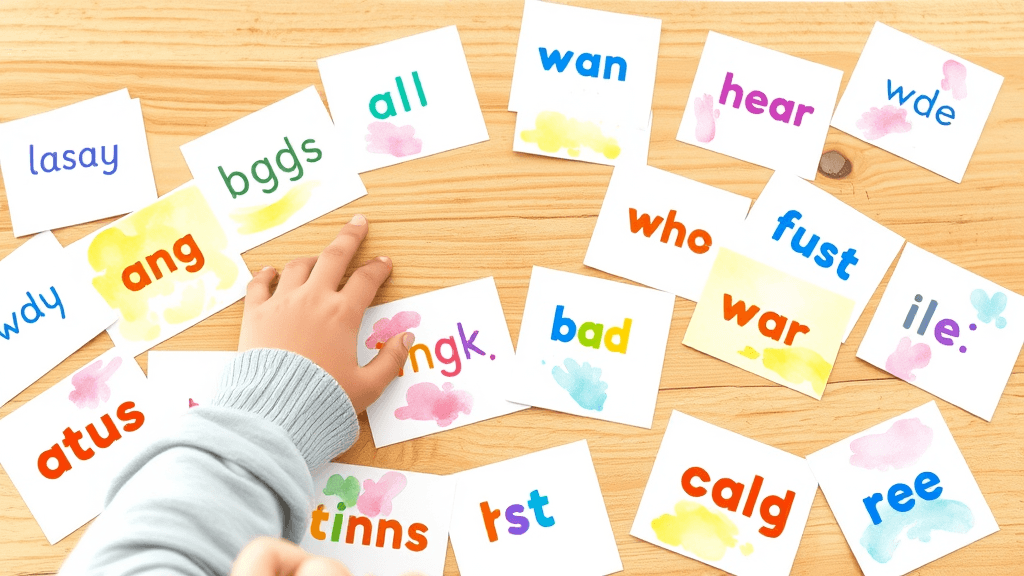
Sight words make up roughly 50 to 75 percent of all written English. If your child can recognise these words instantly — without sounding them out — their reading fluency improves dramatically. This guide provides complete sight word lists for K1 and K2 levels, explains how they fit into the Singapore curriculum, and gives you practical strategies to help your child master them.
TL;DR: Complete sight word lists for K1 and K2 in Singapore. Includes the most common words, practice strategies, and how to build reading fluency at home.
What Are Sight Words?
Sight words are common English words that children learn to recognise on sight — instantly, without decoding. They fall into two categories:
1. Irregular words that do not follow standard phonics rules:
- "the" (you cannot sound out t-h-e and get "the")
- "said" (s-a-i-d does not produce "sed")
- "was", "one", "come", "have", "does"
These must be memorised because phonics alone cannot decode them.
2. High-frequency regular words that appear so often that instant recognition speeds up reading:
- "and", "is", "in", "it", "can", "not"
These can be decoded with phonics, but recognising them instantly saves cognitive effort, letting your child focus on understanding what they read rather than decoding every word.
Sight Words in the Singapore Curriculum
The MOE does not publish an official sight word list. Instead, most Singapore kindergartens draw from two established sources:
The Dolch Sight Word List — 220 words compiled by Edward William Dolch in the 1930s-40s, still widely used today. Organised into levels from Pre-Primer to Third Grade.
The Fry Sight Word List — 1,000 words compiled by Edward Fry in the 1950s (updated in 1980), organised by frequency. The first 100 Fry words account for approximately 50% of all written English.
Most Singapore kindergartens select a subset of these lists appropriate for K1 and K2 levels, sometimes adapted to include words relevant to local context (like "Singapore", "kopitiam").
K1 Sight Words (Age 5)
The following 50 words are commonly taught at the K1 level in Singapore kindergartens. Your child should be able to read these by the end of K1:
Core Words (25 most essential)
- I, a, the, is, it
- in, on, at, to, up
- and, can, go, no, my
- we, he, me, am, do
- see, like, big, not, you
Extended K1 Words (25 additional)
- she, was, for, are, this
- with, his, her, has, had
- but, all, they, will, that
- one, two, said, have, come
- here, look, play, good, want
How to Use This List
Do not try to teach all 50 words at once. Introduce 3-5 new words per week while reviewing previously learned words. A good pace:
- Term 1: Focus on the first 15 core words
- Term 2: Complete the core 25 words
- Term 3: Begin extended K1 words
- Term 4: Consolidate all 50 words
K2 Sight Words (Age 6)
By K2, your child should know the 50 K1 words plus these additional 50 words. This brings the total to approximately 100 sight words by the end of K2:
K2 Words (50 additional)
- an, as, be, by, if
- or, so, us, did, get
- him, let, may, new, now
- old, out, put, ran, run
- say, too, eat, who, why
- just, then, when, them, than
- very, some, what, were, been
- from, down, into, your, over
- much, many, only, also, made
- help, long, each, time, been
High-Frequency Phrases
Once your child knows individual sight words, practise them in common phrases:
- "I can see"
- "It is a"
- "He is in the"
- "She can go to"
- "They want to play"
- "I like to go to the"
- "We can see a big"
- "He said he will come"
Reading words in context (phrases and sentences) is just as important as recognising them in isolation.
8 Strategies to Teach Sight Words (Beyond Flashcards)
1. Read, Read, Read
The best way to encounter sight words is through reading. Read with your child every day and point to words as you go. When you come across a sight word they are learning, pause and let them read it.
2. Word Wall
Create a "word wall" in your child's study area or bedroom. Write each sight word on a card and stick them to the wall. Add new words as they learn them. Review the wall together regularly.
3. Rainbow Writing
Your child writes each sight word multiple times in different colours, tracing over the same word. This combines visual and motor memory.
4. Sight Word Bingo
Make bingo cards with sight words. Call out words and your child marks them. This is a great game for two or more children.
5. Memory Match
Create pairs of sight word cards. Lay them face-down and play memory (concentration). When your child flips a card, they must read the word aloud before looking for the match.
6. Sentence Building
Give your child a set of sight word cards and ask them to build sentences. "Can you make a sentence using 'the', 'is', and 'big'?" This moves beyond recognition to active use.
7. Sight Word Hopscotch
Write sight words in chalk on the ground (or on paper taped to the floor). Your child reads each word as they hop on it. Physical movement reinforces memory.
8. Digital Practice with QuizKin
QuizKin includes sight word quizzes that adapt to your child's level. Words your child gets wrong appear more frequently until they are mastered. The questions are read aloud so your child hears and sees each word simultaneously, reinforcing the connection between the written and spoken form. Progress is tracked automatically, so you can see which words still need practice.
Common Challenges and Solutions
"My child can read sight words on flashcards but not in books"
This is called decontextualisation. Your child has memorised the card, not the word. Solution: always practise sight words in context — in sentences, in books, on signs. Point to words in their environment.
"My child reads 'saw' as 'was' (or similar reversals)"
Common in K1-K2. These are not signs of dyslexia at this age — reversals are developmentally normal until age 7. Solution: when confusion occurs, cover the word and reveal it one letter at a time, left to right. Say the sounds as you reveal each letter.
"My child loses interest after 2 minutes"
Short attention spans are normal for 4-6 year olds. Solution: keep sessions to 5-10 minutes. Use games, not drills. End on a success — always finish with a word they know well so they feel accomplished.
"Some words are just impossible for my child"
Some sight words are genuinely harder because they look similar ("was/saw", "on/no", "then/them") or sound irregular ("said", "does"). Solution: focus on these words in isolation with extra repetition. Create a "tricky words" pile and review it separately.
How Sight Words and Phonics Work Together
Sight words and phonics are not competing approaches — they are complementary. Think of them as two tools in your child's reading toolbox:
- Phonics is the strategy for decoding new, unfamiliar words by sounding them out
- Sight words are the shortcut for the most common words, eliminating the need to decode them every time
When your child encounters a sentence like "The cat sat on the mat":
- "The" is a sight word (irregular, must be memorised)
- "cat", "sat", "mat" can be decoded with phonics (c-a-t, s-a-t, m-a-t)
- "on" is both a sight word and phonically regular
The goal is for your child to have both tools available. Phonics gives them independence with unfamiliar words. Sight words give them speed with common words. Together, they produce fluent reading.
Tracking Progress
Keep a simple log of which sight words your child has mastered:
- Green: Reads instantly (under 3 seconds) on 3 separate occasions
- Yellow: Reads correctly but slowly, or reads correctly some of the time
- Red: Cannot read, or consistently confuses with another word
Review the "yellow" words most frequently — these are on the verge of being mastered and will respond well to a few more practice sessions. "Red" words need more intensive work with the strategies above.
QuizKin's parent dashboard tracks exactly this — showing which sight words your child has mastered, which are in progress, and which need more practice.
Summary
Sight words are the building blocks of reading fluency. By the end of K2, your child should recognise approximately 100 high-frequency words instantly. Combine flashcard-style practice with reading in context, games, writing, and daily reading aloud. Keep sessions short, frequent, and fun. Consistency beats intensity — 5 minutes every day produces better results than 30 minutes once a week.
For more ideas on incorporating sight word practice into play, see our 15 fun learning activities for preschoolers at home.
Sources
- Dolch Sight Words List — comprehensive reference for the 220 Dolch service words, compiled by Dr. Edward William Dolch
- Fry Sight Words List — the 1,000 Fry Instant Words organised by frequency, developed by Dr. Edward Fry
- Nurturing Early Learners (NEL) Framework — Ministry of Education, Singapore
Looking for more? Check out find a tutor for free on TuitionLah.
Exploring parenthood in Singapore? Visit ParentLah for practical tips on raising kids in Singapore.
Practise what you've read with QuizKin
Adaptive quizzes covering phonics, sight words, numbers, and more — aligned with the Singapore MOE curriculum. Free for one child.
Frequently Asked Questions
Sight words are common English words that children learn to recognise instantly by sight, without needing to sound them out. Many sight words do not follow regular phonics rules (like 'the', 'was', 'said'), which is why they must be memorised. Others are simply so common (like 'and', 'is', 'in') that recognising them instantly speeds up reading significantly.
By the end of K2, most Singapore kindergartens expect children to recognise between 50 and 100 sight words. The exact number varies by school. The MOE does not prescribe a fixed list, but most programmes draw from the Dolch list or Fry list, adapted for Singapore usage.
Teach both simultaneously. Phonics gives your child the strategy to decode new words, while sight words give them instant recognition of the most common words in English. About 50 to 75 percent of all text is made up of sight words, so knowing them dramatically improves reading fluency.
Completely normal. Young children need repeated exposure — often 10 to 20 encounters with a word — before it becomes automatic. Review previously learned words regularly alongside new ones. Short daily practice (5-10 minutes) is more effective than long weekly sessions.
Flashcards work but are not the only method. Children learn best through variety. Combine flashcards with reading practice in context (actual books), writing practice, games (bingo, memory match), and digital practice through apps like QuizKin. The key is repeated, multi-modal exposure.
Ready to make learning fun?
QuizKin turns screen time into learning time with adaptive quizzes built for K1-K2 kids in Singapore. Free to start.
Related Articles

Teach Your Child to Read at Home (Singapore Guide)
Help your K1-K2 child read independently at home. From phonics and sight words to building fluency, aligned with the Singapore MOE kindergarten curriculum.

Best Books for K1 & K2 Kids in Singapore: A Parent's Reading List (2026)
20 best books for K1 and K2 children in Singapore — phonics readers, picture books, Chinese storybooks, and decodable texts to build reading confidence at home.
My Child Is Not Reading Yet: A Singapore Parent's Guide (K1-K2)
Your K1 or K2 child is not reading while classmates are. When to worry, when to wait, and practical steps to support a late or reluctant reader in Singapore.