Best Books for K1 & K2 Kids in Singapore: A Parent's Reading List (2026)
20 best books for K1 and K2 children in Singapore — phonics readers, picture books, Chinese storybooks, and decodable texts to build reading confidence at home.
QuizKin Team
Published 29 April 2026

You know reading matters. Every parenting article, every teacher, every well-meaning relative has told you: read to your child. But when you walk into a bookshop or scroll through an online catalogue, the sheer volume of children's books is overwhelming. Which ones are right for a K1 or K2 child in Singapore? Which ones actually help build reading skills rather than just sitting prettily on a shelf?
TL;DR: 20 best books for K1 and K2 children in Singapore — phonics readers, picture books, Chinese storybooks, and decodable texts to build reading confidence at home.
This guide cuts through the noise. It covers the best books for Singapore kindergarteners across four categories: phonics and decodable readers that build reading mechanics, picture books that build comprehension and vocabulary, Chinese storybooks for Mother Tongue development, and non-fiction books that feed curiosity. Every recommendation is chosen with Singapore's K1-K2 curriculum context in mind.
Why Book Selection Matters at the K1-K2 Stage
Not all books are created equal when your child is learning to read. At the K1-K2 stage (ages 4 to 6), children are at vastly different points in their literacy journey. Some are just learning letter sounds. Others are sounding out their first CVC words. A few are reading simple sentences independently.
The right book meets your child where they are. A book that is too difficult creates frustration and teaches your child that reading is hard. A book that is too easy fails to stretch their skills. Literacy researchers call this the "Goldilocks zone" — the level where your child can read about 90% of the words with minimal help.
Here is how to think about book categories for this age:
- Decodable readers: For children who know their letter sounds and are learning to blend. These books use only phonics patterns the child has learned.
- Predictable/pattern books: For children who are building fluency. Repeated phrases and predictable structures help them read with confidence.
- Picture books (read-aloud): For all children, regardless of reading level. Parents read aloud while children build vocabulary, comprehension, and love of stories.
- Chinese storybooks: For building Mother Tongue literacy alongside English.
Best Phonics and Decodable Readers
These books are designed for children who have started learning letter sounds through phonics. They use controlled vocabulary so your child can sound out most words on the page.
Songbirds Phonics (Julia Donaldson)
Written by the author of The Gruffalo, this series is one of the best phonics readers available. Each book targets specific phonics patterns and progresses in difficulty. The stories are genuinely engaging — not the stilted "the cat sat on the mat" type. Titles like Top Dog and Zak and the Vet feel like real stories while keeping the text fully decodable.
Best for: K1 children who know their initial letter sounds and are starting to blend CVC words.
Usborne Phonics Readers
Colourful, well-illustrated, and affordable. The Usborne series includes titles like Big Pig on a Dig and Ted in a Red Bed that use rhyme and repetition alongside phonics. Children find them funny, which matters — a child who laughs while reading is a child who will pick up a book again.
Best for: K1 to early K2. The rhyming text makes blending feel natural and fun.
Jolly Phonics Readers
If your child's school uses Jolly Phonics (many Singapore kindergartens do), these readers align directly with the letter-sound order taught in class. Each book introduces only the sounds your child has learned up to that point. This tight alignment between classroom and home reading eliminates confusion.
Best for: Children whose kindergarten follows the Jolly Phonics programme. Reinforces what they learn at school.
Bob Books (Set 1: Beginning Readers)
A classic for a reason. Bob Books start with just two or three letter sounds per book and gradually increase complexity. The illustrations are simple — almost stick-figure quality — but children love them because they can read these books entirely by themselves from the very start. That first experience of independent reading is powerful.
Best for: K1 children just beginning to blend. The simplest entry point into independent reading.
Peter and Jane (Ladybird Key Words)
A staple in many Singapore households across generations. The Peter and Jane series uses a keyword approach — introducing high-frequency sight words systematically through stories. While not strictly phonics-based, it builds word recognition and reading fluency effectively. Many parents in Singapore grew up with these books themselves.
Best for: K2 children building fluency and sight word recognition. Works well alongside phonics readers.
Best Picture Books for Read-Aloud
These books are not meant for your child to read alone (yet). They are for you to read aloud together. Read-alouds build vocabulary, listening comprehension, and a love of stories that no phonics drill can replicate.
The Gruffalo (Julia Donaldson)
A picture book classic with brilliant rhyme, rhythm, and repetition. Children quickly memorise parts of the text and "read along" — a form of emergent reading that builds confidence. The language is rich without being overwhelming, and the story teaches logical thinking (the mouse outsmarts every predator through clever bluffing).
Best for: All K1-K2 children. One of the best read-aloud books in the English language for this age group.
Where the Wild Things Are (Maurice Sendak)
Short, powerful, and visually stunning. Max's journey to the land of the Wild Things captures the imagination of every 4-to-6-year-old. The sparse text and bold illustrations teach children that stories can be told through pictures as much as words — an important comprehension skill.
Best for: K1 children who are still developing attention spans for longer stories. The brevity is a feature, not a bug.
Diary of a Wombat (Jackie French)
Dry humour that children and parents both enjoy. The wombat's deadpan narration of its daily attempts to train its human neighbours makes children laugh while modelling diary-style writing. A great gateway to narrative structure.
Best for: K2 children who are ready for stories with subtle humour and more complex sentence structures.
The Very Hungry Caterpillar (Eric Carle)
A perennial favourite for good reason. The counting, the days of the week, the life cycle of a butterfly — it layers learning naturally into a story. The interactive die-cut pages keep small hands engaged. Many Singapore kindergartens use this book in their curriculum, so your child may already know it from school.
Best for: K1 children. Reinforces counting, sequencing, and days of the week.
Don't Let the Pigeon Drive the Bus! (Mo Willems)
Interactive, theatrical, and perfect for reluctant readers. The pigeon talks directly to the reader, begging to drive the bus. Children shout "No!" at the book, which makes reading feel like a game. Mo Willems writes with genius-level simplicity — the text uses mostly short, high-frequency words that K2 children may start recognising.
Best for: K1-K2 children who need convincing that books are fun, not work.
Best Chinese Storybooks for K1-K2
Chinese literacy is a priority for Singapore families, but finding the right Chinese books is harder than finding English ones. Here are the best options for K1-K2 children.
Little Chinese Reader Series
Designed for Singapore children with progressive difficulty levels. Each book focuses on a set of high-frequency Chinese characters used in daily life, aligned with the MOE kindergarten curriculum. The illustrations are modern and appealing. Level 1 books use 20 to 30 unique characters, making them manageable for beginners.
Best for: K1 children beginning Chinese character recognition. The Singapore context (HDB flats, hawker centres, MRT) makes the stories relatable.
Odonata Graded Readers (Chinese)
Published by a Singaporean company, Odonata Chinese readers are specifically designed for local children. They grade reading levels clearly and use hanyu pinyin alongside characters for early readers. The series covers everyday topics like going to the market, visiting the zoo, and family celebrations — familiar experiences for Singapore kids.
Best for: K1-K2 children at any stage of Chinese reading. The graded levels mean you can find the right difficulty.
My First Chinese Storybooks (Better Chinese)
A well-structured series with beautiful watercolour illustrations. Each book introduces a manageable number of new characters while recycling previously learned ones. Audio resources are available online so children can hear native pronunciation — especially helpful for families where parents feel their Chinese is not strong.
Best for: K2 children building Chinese reading independence. The audio support bridges the gap when parents lack confidence in their own Mandarin.
Chinese Picture Books by Jimmy Liao
Jimmy Liao's picture books are visually extraordinary. Titles like The Sound of Colours and Starry Starry Night use poetic language and dream-like illustrations. While the Chinese text may be above K1-K2 independent reading level, they are exceptional read-alouds that show children that Chinese literature can be just as beautiful and imaginative as English books.
Best for: Read-aloud for all K1-K2 children. Shows children that Chinese books are not just about learning — they are about wonder.
Best Non-Fiction Books for Curious Minds
Non-fiction often gets overlooked in early reading, but many children — especially those who are less drawn to stories — devour books about dinosaurs, space, animals, and how things work.
National Geographic Little Kids First Big Book Series
Stunning photography with simple, clear text. Titles include First Big Book of Dinosaurs, First Big Book of the Ocean, and First Big Book of Space. These books reward browsing — children do not need to read front-to-back. They flip to a page that interests them, look at the photos, and absorb facts. This is legitimate reading behaviour that builds content knowledge and vocabulary.
Best for: K1-K2 children interested in animals, science, or nature. Especially good for children who are not drawn to fiction.
DK My First Series
DK publishes beautifully designed early non-fiction with large photos and minimal text. Topics range from My First Body Book to My First Book of Planets. The text is simple enough for advanced K2 readers to attempt independently, and the visual layout supports comprehension even when children cannot read every word.
Best for: K2 children who prefer facts to stories. Builds academic vocabulary that will serve them in primary school.
How to Build a Home Reading Routine
Having the right books is step one. Step two is creating a reading habit that sticks. Here is a practical framework for Singapore families.
The 15-Minute Daily Reading Block
Research consistently shows that 15 minutes of daily reading produces measurable literacy gains within three months. Structure your 15 minutes like this:
- 5 minutes: Child reads a decodable or familiar book to you (or attempts to, with your support)
- 10 minutes: You read aloud a picture book or Chinese storybook to your child
This two-part structure builds both decoding skills (child reads) and comprehension/vocabulary (parent reads aloud). Fifteen minutes is short enough to fit into any schedule — after dinner, before bed, or as part of an after-school routine.
Match the Book to the Mood
Not every reading session needs to be a phonics drill. Some days, your child wants a favourite picture book read for the tenth time. That is fine. Re-reading builds fluency and confidence. Other days, they are ready to tackle something new. Follow your child's lead while ensuring a mix of book types across the week.
Use the Library Strategically
The National Library Board (NLB) in Singapore allows children to borrow up to 16 items at a time. Use this generously. Every two weeks, visit the library and let your child choose 5 to 8 books that interest them. Also pick 2 to 3 books you have pre-selected (a decodable reader at their level, a Chinese storybook, and a non-fiction title). This balance between child choice and parent curation works well.
Pair Books with Digital Practice
Books build vocabulary, comprehension, and a love of reading. Educational apps like QuizKin build phonics mechanics — letter sounds, blending, and writing practice. The two complement each other. After reading a book together, your child might practise the letter sounds they encountered on an app. After practising phonics on an app, they might read a decodable book that uses those same sounds.
Reading Level Guide for K1 vs K2
Knowing where your child falls helps you choose the right books.
K1 (age 4 to 5) — Pre-reader to Emergent Reader
- Recognises some letters and their sounds
- May know a few sight words (the, I, is, a)
- Relies heavily on pictures to understand stories
- Best books: Simple decodable readers (Bob Books Set 1), pattern books, rich picture books for read-aloud
K2 (age 5 to 6) — Emergent to Early Reader
- Knows most letter sounds and is learning to blend
- Can read simple CVC words and some sight words
- Beginning to follow text with a finger while being read to
- Best books: Phonics readers (Songbirds, Jolly Phonics Readers), Peter and Jane (early levels), picture books with predictable text
If your child is not yet reading at the expected level, do not panic. The range of "normal" at this age is wide. Focus on books that are enjoyable, not aspirational.
Where to Buy Children's Books in Singapore
- NLB (borrow for free): The most cost-effective option. All branches have dedicated children's sections.
- Popular Bookstore: Wide selection of phonics readers, Peter and Jane, and Chinese readers. Available in most malls.
- Times Bookstores: Good curation of quality picture books and imports.
- Woods in the Books: Independent bookshop at Tiong Bahru with excellent children's section and knowledgeable staff.
- Kinokuniya: Best selection of English and Japanese picture books. The Takashimaya branch has a large children's floor.
- Shopee/Lazada: Competitive prices on boxed sets (Songbirds, Bob Books, Usborne). Look for local sellers to avoid long shipping times.
Key Takeaways
- A balanced home library for K1-K2 children includes decodable readers, picture books, Chinese storybooks, and non-fiction
- Decodable readers build decoding skills. Picture books build vocabulary and comprehension. You need both.
- Fifteen minutes of daily reading — five minutes of child reading, ten minutes of parent read-aloud — produces measurable results within three months
- Use the NLB library generously. Borrow widely, buy the favourites your child wants to re-read
- Pair books with phonics apps for a complete literacy approach — books alone are not enough, and apps alone are not enough
- Follow your child's interests. A child who loves dinosaurs and reads non-fiction about dinosaurs every day is building reading skills just as effectively as a child reading fiction
- Do not rush. The range of reading ability at K1-K2 is enormous. Meet your child where they are, not where you think they should be
Sources
Looking for more? Check out find a tutor for free on TuitionLah.
Exploring parenthood in Singapore? Visit ParentLah for practical tips on raising kids in Singapore.
Practise what you've read with QuizKin
Adaptive quizzes covering phonics, sight words, numbers, and more — aligned with the Singapore MOE curriculum. Free for one child.
Frequently Asked Questions
Aim for one book per day, or at least five per week. This does not mean your child reads independently — shared reading where you read aloud and your child follows along counts. The goal is daily exposure to books and print. Re-reading favourite books is also beneficial because it builds fluency and confidence. Quality of engagement matters more than quantity of titles.
Both. The National Library Board (NLB) in Singapore offers an excellent children's section with thousands of titles you can borrow for free. Start by borrowing widely to discover what your child enjoys, then buy the books they want to re-read. Children build reading fluency through repeated readings of familiar books, so owning a small home library of favourites is worthwhile.
Yes, this is completely normal for K1 and early K2 children. Picture reading is a legitimate stage of literacy development — your child is learning story structure, sequencing, and comprehension through illustrations. Gently point to words as you read aloud, run your finger under the text, and let your child fill in predictable or repeated words. Do not force word-by-word reading before your child is ready, as this creates negative associations with books.
Decodable books use only letter-sound patterns the child has already learned in phonics lessons. For example, a CVC-stage decodable book would only contain words like cat, sat, mat, pin, and ten — no words the child cannot sound out. Regular picture books use natural language and may contain complex words the child cannot decode yet. Both serve different purposes: decodable books build decoding confidence while picture books build vocabulary, comprehension, and a love of reading.
Yes. Singapore's bilingual education policy means your child will study both English and Mother Tongue from Primary 1. Building early familiarity with Chinese text — even through picture books where a parent reads aloud — gives children a significant head start. Research from Singapore's National Institute of Education shows that children with regular home exposure to Chinese books perform better in Primary 1 Chinese than those whose Chinese learning is limited to school hours.
Ready to make learning fun?
QuizKin turns screen time into learning time with adaptive quizzes built for K1-K2 kids in Singapore. Free to start.
Related Articles
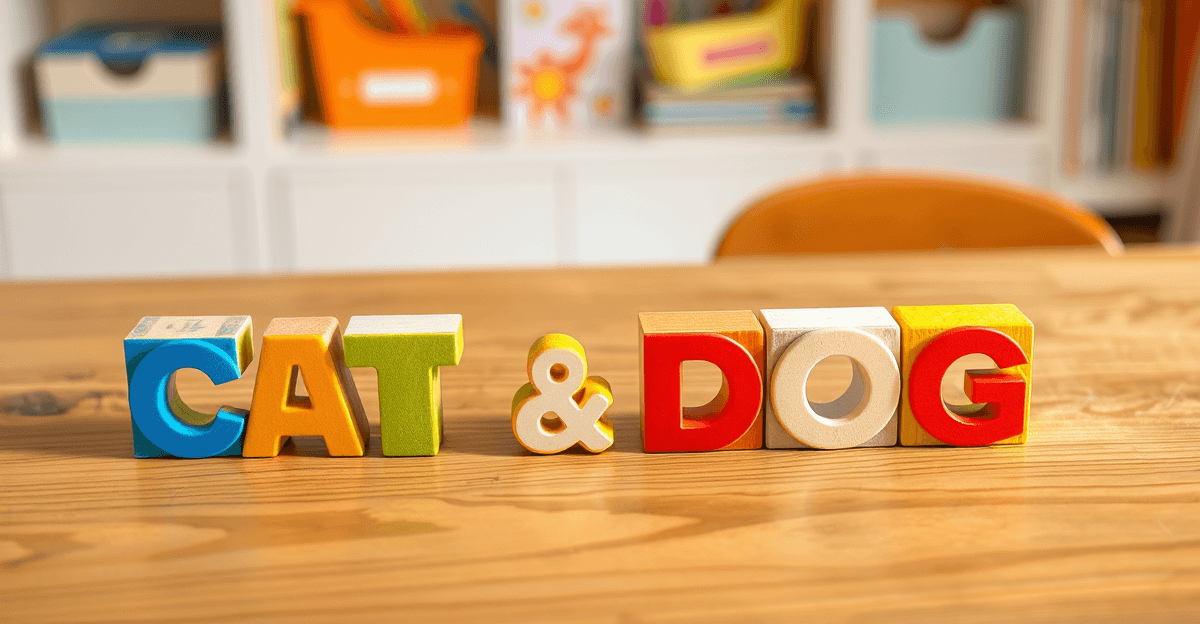
CVC Words for Beginners: Blending Activities for K1 & K2 (Singapore)
What are CVC words, when should your child learn them, and 12 hands-on blending activities for K1-K2 kids in Singapore. Includes a printable CVC word list.
Teach Your Child to Read at Home (Singapore Guide)
Help your K1-K2 child read independently at home. From phonics and sight words to building fluency, aligned with the Singapore MOE kindergarten curriculum.

The 15-Minute After-School Learning Routine for K1 & K2 Kids (Singapore)
A practical daily routine for reinforcing kindergarten learning at home. 15 minutes of phonics, sight words, and writing practice that Singapore parents can start today.