Writing Practice Apps for Kids: Helping Your Preschooler Learn to Write (Singapore)
How letter tracing apps and writing practice tools help K1-K2 children develop handwriting readiness. What to look for, how to use them, and what Singapore parents need to know.
QuizKin Team
Published 26 April 2026
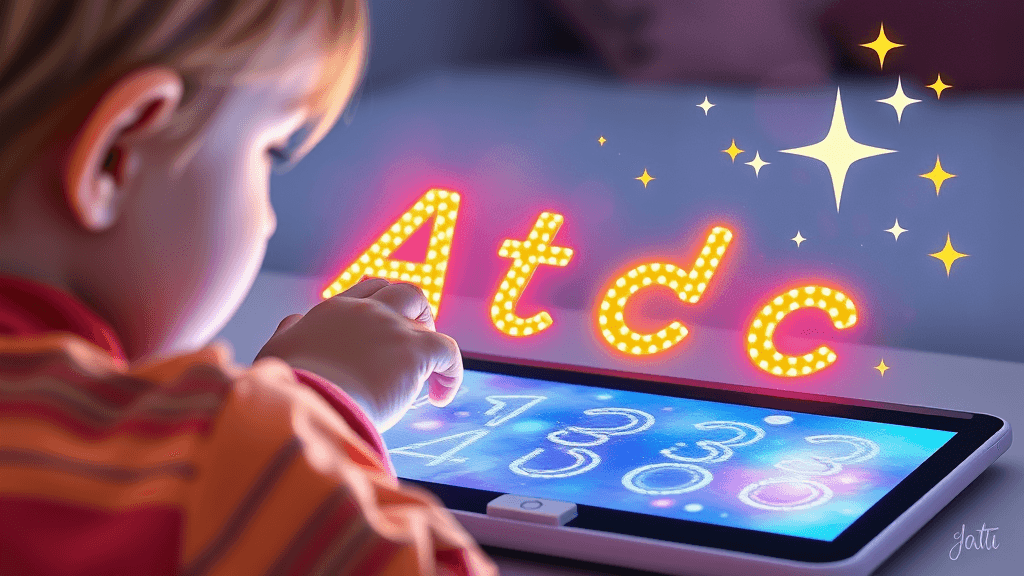
Writing is one of the most complex skills young children develop. Before a child can form a single letter on paper, their brain and body need months of preparatory development — fine motor strength, hand-eye coordination, pencil grip, and an understanding of how letters are shaped and sequenced.
TL;DR: How letter tracing apps and writing practice tools help K1-K2 children develop handwriting readiness. What to look for, how to use them, and what Singapore parents need to know.
Digital writing practice apps can play a useful role in this process. When used well, they help children learn letter shapes, practice stroke sequences, and build confidence before formal pencil-on-paper work. When used poorly, they become passive screen time that delivers little real benefit.
This guide explains what Singapore parents should know about writing practice apps, how to use them effectively, and what to look for in a good tool.
The Building Blocks of Writing Readiness
Before a child can write, they need three types of readiness:
Fine Motor Strength
Writing requires precise control of small hand muscles. Children who lack fine motor strength struggle to hold a pencil, control letter size, and write without tiring quickly. Signs of underdeveloped fine motor skills include:
- Avoiding activities that involve gripping or pinching
- Difficulty with buttons, zippers, or using scissors
- Holding crayons or pencils with a fist grip
- Tiring quickly during drawing or colouring activities
Physical activities build fine motor strength far better than any app: playdough, cutting with scissors, threading beads, building with small bricks, finger painting, and colouring within the lines all develop the muscle groups needed for writing.
Visual-Motor Integration
This is the ability to coordinate what the eyes see with what the hand does. It is what allows a child to look at the letter 'A' and reproduce it on paper with the correct proportions and stroke sequence.
Visual-motor integration develops through practice. Tracing is an excellent early activity because it removes the hardest part (deciding where to go next) and lets the child focus on the physical movement.
Letter Knowledge
Before a child can write a letter, they need to know what it looks like, what sound it makes, and — critically — what order to draw the strokes. Writing 'A' correctly means starting at the top, drawing down-left, then down-right, then crossing in the middle. Getting the stroke order right from the beginning prevents habits that are hard to undo later.
How Writing Practice Apps Help
A good writing practice app targets visual-motor integration and letter knowledge simultaneously. Here is what effective app-based writing practice looks like:
Tracing with guidance. The child traces a letter that is already visible on screen, following a path or arrows that show stroke sequence. This builds the motor memory for each letter shape.
Stroke order animation. Before tracing, the child watches an animation showing exactly how the letter is formed, including which stroke comes first.
Immediate feedback. The app responds to whether the child is following the correct path — not just drawing anywhere in the letter outline.
Graduated difficulty. First, trace with full guidance. Then, trace with fewer cues. Then, write from memory with only the letter shown as reference.
Repetition without tedium. Children need many repetitions to internalize letter shapes, but repetition can become boring. Good apps build in variety — different visual themes, short sessions, rewards for completion — to keep children engaged across many practice sessions.
Letter Tracing in QuizKin
QuizKin includes letter tracing for both English and Chinese. Here is how it works:
English Letter Tracing
All 26 uppercase and lowercase English letters are available for tracing practice. For each letter:
- An animated stroke order preview plays before practice begins
- The child traces along the correct path using their finger
- Audio confirms the letter name and sound after each successful trace
- Stars are awarded for completion, encouraging repeat practice
The letters are presented in a large, clean font sized for small fingers. The app detects whether the child is following the correct stroke sequence, not just drawing within the borders.
Chinese Character Tracing
QuizKin also includes Chinese character tracing for K1-K2 level characters. This is particularly useful because Chinese writing has strict stroke order rules that must be learnt from the beginning.
For each character:
- Pinyin pronunciation is shown alongside the character
- Stroke order animation demonstrates the correct sequence
- The child traces each stroke in order
- Audio plays the Mandarin pronunciation after completion
This helps children who are learning Chinese at home or in a bilingual preschool build correct stroke habits early.
Using a Writing App Alongside Physical Practice
The most effective approach combines app-based practice with pencil-on-paper work. Here is a simple daily routine:
Monday, Wednesday, Friday:
Spend 10 minutes on letter tracing in the app. Focus on 3-4 letters the child is still learning.
Tuesday, Thursday:
Practise the same letters on paper with a pencil or crayon. Use lined paper or a whiteboard. Say the letter name and sound aloud as you write.
Weekend:
Read a book together and look for letters or words containing the sounds your child practised this week. This transfers letter knowledge to real reading context.
This alternating approach means your child practises each letter digitally and physically several times per week — enough repetition to build memory, with enough variety to stay engaged.
What to Look for in a Writing Practice App
Stroke order guidance. The app must show correct stroke order, not just a letter outline to colour in. Stroke order matters for both speed and legibility as children progress to longer texts.
British English letter formation. Singapore uses British English letter formation standards. Some apps use American formation conventions, which can create inconsistencies. Check that the letter 'k' is formed correctly for your school's standard.
Age-appropriate sizing. K1-K2 children need large touch targets. If the tracing path is narrow or the letters are small, the app will cause frustration rather than learning.
Audio reinforcement. Every letter trace should be accompanied by the correct letter sound, not just the letter name. Linking the written shape to its phonics sound reinforces both literacy skills simultaneously.
Chinese support. If your child attends a bilingual preschool or is learning Mandarin at home, look for an app that covers Chinese character tracing with correct stroke order.
Signs Your Child Is Ready to Move Beyond Tracing
Letter tracing is a stepping stone, not the destination. Watch for these signs that your child is ready for the next stage:
- They can write most letters from memory without tracing guides
- They hold the pencil correctly (or close to correctly) without reminders
- They recognise when they have made a mistake and self-correct
- They ask to write their own name, words, or notes
When these signs appear, shift focus to free writing practice: writing their name, copying simple words, writing labels for drawings. Tracing apps become less important at this stage, though they remain useful for Chinese characters (where stroke order complexity remains a challenge for longer).
The Role of Preschool in Writing Development
Singapore preschools following the MOE NEL framework introduce writing readiness activities from Nursery and begin formal letter formation in K1. By the end of K2, most children are expected to:
- Write all 26 uppercase and lowercase English letters from memory
- Write their own name
- Copy simple words and phrases
- Begin writing simple sentences
Home practice with a writing app supports but does not replace the structured writing instruction your child receives at school. Talk to your child's teacher about what letters and characters are being covered that term, and align your app practice to match — reinforcing the same content at home that is being taught in school makes the most efficient use of practice time.
Getting Started with Letter Tracing in QuizKin
QuizKin includes letter tracing as part of its free tier. You can start practising English and Chinese letter formation today without a subscription.
To begin:
- Create a free account at quizkin.com
- Set up your child's profile (takes about 2 minutes)
- Select Letter Tracing from the category menu
- Start with uppercase A-Z before moving to lowercase
The app adapts to your child's progress — letters they have mastered appear less frequently, while letters they find difficult get more practice time.
Also useful: Phonics for Preschoolers: Letter Sounds & Blending and Fine Motor Skills and Handwriting Readiness
Looking for more? Check out find a tutor for free on TuitionLah.
Exploring parenthood in Singapore? Visit ParentLah for practical tips on raising kids in Singapore.
Practise what you've read with QuizKin
Adaptive quizzes covering phonics, sight words, numbers, and more — aligned with the Singapore MOE curriculum. Free for one child.
Frequently Asked Questions
Most children develop the fine motor skills needed for writing between ages 4 and 5, which aligns with K1 in Singapore. Before formal writing, children should build fine motor strength through activities like colouring, playdough, cutting with scissors, and threading beads. Letter tracing apps can begin at K1 as a supplement to these physical activities.
Screen-based letter tracing can help children learn letter shapes and directionality (which stroke comes first, which direction to move). However, it should complement rather than replace pencil-on-paper practice. The tactile feedback of a real pencil on paper is important for developing the muscle memory needed for handwriting.
Most Singapore kindergartens teach uppercase letters first in Nursery, then introduce lowercase in K1. This is because uppercase letters are generally simpler in shape — most are formed from straight lines and simple curves, whereas lowercase letters have more variation. Check with your child's preschool to align your home practice with the school sequence.
Yes, but gently and early. The tripod grip (holding the pencil between the thumb and index finger with support from the middle finger) is the most efficient and least tiring grip for extended writing. Correcting grip before it becomes a habit is much easier than correcting it later in primary school. A pencil grip aid from a stationery shop can help reinforce the correct position.
Chinese character writing follows strict stroke order rules — each character must be written with strokes in a specific sequence. This stroke order affects the flow and legibility of the character. Apps that teach Chinese writing must include correct stroke order guidance. QuizKin includes stroke order animation for all Chinese characters it covers.
Ready to make learning fun?
QuizKin turns screen time into learning time with adaptive quizzes built for K1-K2 kids in Singapore. Free to start.
Related Articles
How to Teach Your Preschooler to Write in Singapore: A Step-by-Step Guide for Parents (2026)
Practical guide for Singapore parents teaching K1 and K2 children to write. Handwriting readiness, letter formation, pencil grip, and when to start. Aligned with MOE expectations.
Preschool Maths Worksheets Singapore: What K1 and K2 Kids Actually Need to Learn (2026 Guide)
A parent's guide to preschool maths worksheets in Singapore. What MOE expects by Primary 1, which skills to focus on at K1 and K2, and how to make maths practice effective.

Teaching Addition and Subtraction to Preschoolers in Singapore: A Parent's Guide (2026)
Practical guide to teaching addition and subtraction to K1 and K2 children in Singapore. Hands-on activities, MOE-aligned progression, and common mistakes to avoid.