Bilingual Learning for Preschoolers: English & Mother Tongue (Singapore)
Raise a bilingual child in Singapore. Strategies for balancing English and Mother Tongue at home, common myths debunked, and daily routines for K1-K2 kids.
QuizKin Team
Published 18 May 2026
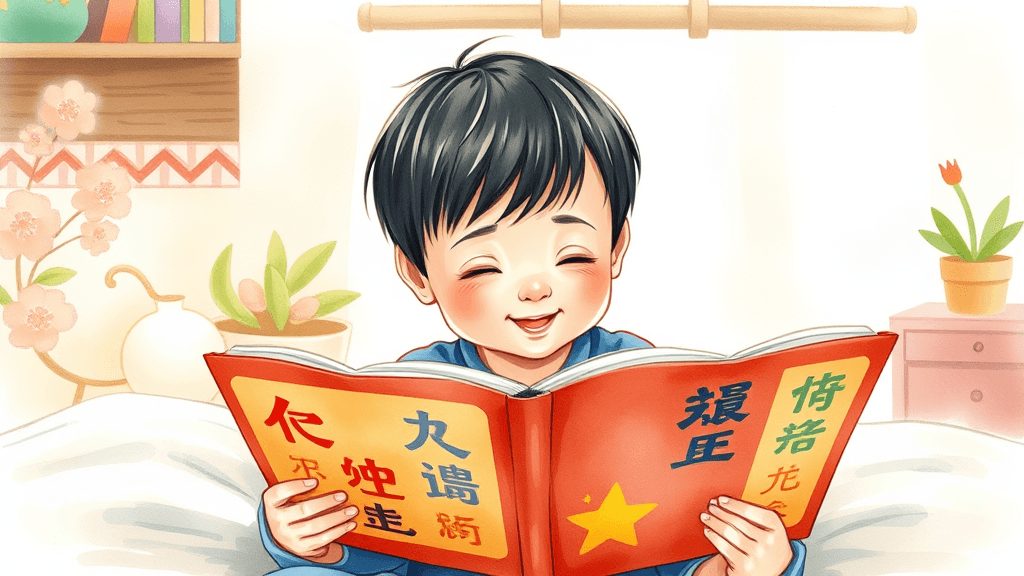
Singapore's bilingual education policy is one of the defining features of its school system. Every child learns English as the medium of instruction and a Mother Tongue language — Mandarin Chinese, Malay, or Tamil — as a second language. This policy starts in Primary 1, but the foundation is built in the preschool years.
TL;DR: Raise a bilingual child in Singapore. Strategies for balancing English and Mother Tongue at home, common myths debunked, and daily routines for K1-K2 kids.
For most Singapore parents, the challenge is not whether to raise a bilingual child — that is a given. The challenge is how. How do you balance two languages when one inevitably dominates at home? How much exposure is enough? And what do you do when your child refuses to speak Mother Tongue at all?
This guide covers the research behind bilingual development, practical strategies that work for K1-K2 children in Singapore, common myths that need debunking, and daily routines you can implement starting today.
Why Bilingual Education Matters Beyond School Grades
The benefits of bilingualism extend far beyond passing Mother Tongue exams in school. Research from the National University of Singapore and international studies consistently demonstrate several cognitive advantages for bilingual children.
Cognitive flexibility. Bilingual children develop stronger executive function — the mental skills that help with planning, focusing attention, switching between tasks, and self-control. These skills are foundational for all academic learning, not just language.
Metalinguistic awareness. Children who learn two languages develop an earlier and deeper understanding of how language works. They understand that the word "dog" is an arbitrary label, not an intrinsic property of the animal. This awareness accelerates literacy development in both languages.
Cultural connection. In Singapore's multi-ethnic society, Mother Tongue is not just a school subject — it is the bridge to cultural heritage, family relationships, and community identity. Many grandparents communicate primarily in Mother Tongue, and losing this connection has real social costs.
Future career advantage. Singapore is positioned as a bridge between East and West. Professionals who are genuinely bilingual — not just exam-bilingual — have significant advantages in fields ranging from business to diplomacy to technology.
The Critical Language Window
Neuroscience research confirms what language teachers have long observed: young children learn languages differently from older children and adults. Between ages 2 and 7, children's brains form neural connections for language at a rate that will never be matched later in life. During this window, children can absorb the sounds, grammar, and vocabulary of multiple languages simultaneously and with relative ease.
After age 7, this natural language acquisition ability begins to decline. It does not disappear entirely, but learning a second language becomes more effortful and less intuitive. This is why the preschool years are so valuable for bilingual development.
A 2024 study published in the journal Bilingualism: Language and Cognition found that bilingual preschoolers outperformed monolingual peers on tasks requiring attention control and cognitive flexibility, regardless of socioeconomic background.
Understanding How Children Learn Two Languages
Before diving into strategies, it is important to understand how bilingual development actually works in young children. This helps set realistic expectations and avoid common pitfalls.
The Two Pathways to Bilingualism
Simultaneous bilingualism occurs when a child is exposed to two languages from birth. This is common in Singapore families where parents speak different languages or where the home language differs from the school language. Children learning two languages simultaneously typically reach the same developmental milestones as monolingual children, though they may reach some milestones in each language at slightly different times.
Sequential bilingualism occurs when a child learns one language first and then is introduced to a second language later — often when they start kindergarten. This is common when the home language is Mother Tongue and English is introduced primarily through school.
Both pathways produce competent bilingual speakers. Neither is inherently better. What matters most is the quality and consistency of input in both languages.
The Vocabulary Distribution Myth
One statistic that worries parents unnecessarily: bilingual preschoolers often have a smaller vocabulary in each individual language compared to monolingual peers. This is normal and expected. A bilingual child's total vocabulary — combined across both languages — is typically equal to or larger than a monolingual child's vocabulary.
For example, a bilingual K1 child might know 400 English words and 300 Mandarin words, while a monolingual English-speaking child knows 500 English words. The bilingual child knows 700 words total and can communicate in two languages. The smaller per-language vocabulary is a distribution effect, not a deficit.
Code-Switching Is Normal
When bilingual children mix languages in a single sentence — saying things like "I want to eat mian bao" or "Can you kai the door?" — parents often worry. This behaviour, called code-switching, is not a sign of confusion. It is actually a sophisticated linguistic skill that shows the child can draw flexibly from both language systems. Adult bilingual speakers do this too.
Code-switching is most common when children do not yet know a word in one language but know it in the other. It typically decreases as vocabulary in both languages grows. Do not correct or discourage it.
Practical Strategies for Singapore Families
Strategy 1: One Parent, One Language (OPOL)
The most commonly recommended approach is for each parent to consistently speak one language to the child. If one parent is more comfortable in English and the other in Mandarin, each speaks their stronger language.
Advantages: Clear, consistent input in both languages. The child associates each language with a specific person, which helps them keep the languages distinct.
Challenges: Requires discipline and consistency. It can feel unnatural for the parent speaking the minority language, especially if their spouse does not understand it. It also requires that the minority-language parent spends enough time with the child to provide adequate exposure.
Making it work in Singapore: OPOL works best when grandparents or caregivers reinforce the minority language. If your helper or grandparent speaks primarily Mother Tongue, designate them as a key language input source. Even one additional person consistently speaking Mother Tongue can make a significant difference.
Strategy 2: Time and Place (Structured Separation)
Designate specific times or contexts for each language. For example: Mother Tongue at dinner, English at other meals. Mother Tongue on weekends, English on weekdays. Mother Tongue during bedtime stories, English during playtime.
Advantages: Flexible and easy to implement. Does not require each parent to speak only one language.
Challenges: Requires the whole family to follow the schedule. Can feel forced initially.
Making it work in Singapore: Many families find that designating specific activities rather than times works better. For example, reading storybooks is always in Mother Tongue, educational app time is in English, TV time alternates. This creates natural associations between the language and the activity.
Strategy 3: Minority Language at Home (ML@H)
The family speaks Mother Tongue at home, and the child learns English primarily through school and social interactions. This approach works well when both parents are comfortable speaking Mother Tongue and the child has sufficient English exposure through kindergarten and media.
Advantages: Ensures strong Mother Tongue foundation before formal schooling. Effective when Mother Tongue is at risk of being lost.
Challenges: In Singapore, where English is the dominant social language, maintaining a Mother Tongue-only home environment requires significant effort. Children often switch to English once they start school and have English-speaking friends.
Making it work in Singapore: Be flexible. As your child's English becomes stronger through school, you may need to increase Mother Tongue effort at home to maintain balance. This is not failure — it is normal adjustment.
Building a Daily Bilingual Routine
Here is a practical daily routine for a K1 or K2 child that provides meaningful exposure to both languages. Adjust the languages and times to fit your family.
Morning (Before School)
- Breakfast conversation in Mother Tongue (10 minutes of natural chat about plans for the day)
- One Mother Tongue song or nursery rhyme while getting ready
After School
- 15 minutes of English reading practice (phonics, sight words, or reading a book together)
- 15 minutes of Mother Tongue reading (bilingual books, character recognition, or reading with grandparents)
- 20 minutes of educational app time — alternate days between English-focused and Mother Tongue-focused activities. QuizKin supports both phonics practice and Chinese character writing
Evening
- Dinner conversation in Mother Tongue (the whole family participates)
- Bedtime story in whichever language you choose — alternating languages across nights works well
- For children who enjoy it, a short educational activity in either language
Weekends
- Mother Tongue immersion activities: visiting grandparents, attending cultural events, watching Mother Tongue cartoons
- English enrichment: library visits, museum trips, social playdates with English-speaking friends
The key is consistency, not perfection. Missing a day is not a problem. Abandoning the routine for weeks is.
Common Myths About Bilingual Learning — Debunked
Myth 1: "Children Should Master One Language Before Starting Another"
This belief has no research support. Children's brains are wired for multilingual acquisition from birth. Waiting until a child "masters" English before introducing Mother Tongue actually makes Mother Tongue acquisition harder, because language learning ability decreases with age. The preschool years are the optimal window for bilingual development.
Myth 2: "Bilingual Children Have Speech Delays"
This myth persists despite extensive research debunking it. Large-scale studies comparing bilingual and monolingual children show no difference in the age at which they reach speech milestones. If a bilingual child has a genuine speech delay, bilingualism is not the cause — the delay would exist regardless of how many languages they are exposed to. Reducing language exposure does not help and may harm cultural connection and family communication.
Myth 3: "My Child Will Learn Mother Tongue in School — I Do Not Need to Do Anything at Home"
School alone is insufficient for Mother Tongue proficiency. In a typical Singapore kindergarten, Mother Tongue instruction accounts for about 30 to 45 minutes per day. The rest of the school day is in English. Without home reinforcement, most children develop only basic conversational ability in Mother Tongue — enough to pass K2 assessments but not enough for genuine biliteracy.
Research from Singapore's National Institute of Education shows that children with strong home exposure to Mother Tongue perform significantly better in Mother Tongue subjects throughout school, including at PSLE level.
Myth 4: "Reading Aloud in Mother Tongue Is Not Important If My Child Attends an English-Medium School"
Reading aloud in Mother Tongue is one of the most impactful things you can do. It builds vocabulary, familiarises your child with the sound patterns of the language, and — critically — associates the language with positive, bonding experiences. A child who only encounters Mother Tongue through worksheets and drills will develop negative associations with the language.
The Singapore National Library Board offers extensive Mother Tongue children's book collections. Many Singapore bookshops carry bilingual picture books. Use them.
Supporting Specific Mother Tongue Languages
Mandarin Chinese
Mandarin is the most commonly studied Mother Tongue language in Singapore. Key strategies for preschoolers include focusing on character recognition before writing (children can learn to read characters long before they can write them), using the stroke order approach for writing practice, and incorporating Chinese media (Xiao Ling Dang, Peppa Pig in Mandarin) into screen time.
QuizKin includes Chinese character tracing with stroke-by-stroke guidance, making daily practice convenient and engaging. Start with high-frequency characters that appear in everyday life — numbers, family member terms, and common objects.
Malay
For Malay language learners, leverage the phonetic advantage: Malay uses the Latin alphabet with relatively consistent letter-sound correspondence, making it easier for English-literate children to start reading in Malay. Focus on vocabulary building through conversation and phonics-based reading, which transfers well between English and Malay.
Tamil
Tamil script is visually distinct from English, which means children need explicit instruction in letter recognition. Start with the vowels and basic consonants, use Tamil songs and rhymes to build phonological awareness, and connect learning to cultural contexts like temple visits and festival celebrations.
Overcoming Common Challenges
"My Own Chinese Is Not Good Enough"
Many Singapore parents worry that their own Chinese ability is insufficient. You do not need to be fluent to support your child's bilingual development. Use audio resources, apps, and read-along books to supplement your own ability. Your willingness to learn alongside your child actually models a positive attitude towards bilingualism.
"There Is Not Enough Time"
Bilingual learning does not require separate study sessions. Integrate it into daily routines you are already doing: label groceries in Chinese at the supermarket, count stairs in Mandarin, sing Chinese songs in the car. Even 15 minutes of intentional Chinese exposure per day adds up to meaningful progress over the K1 and K2 years.
Building a Bilingual Foundation for Primary 1
By the time your child enters Primary 1, aim for these bilingual milestones:
- Spoken Chinese — can hold a simple conversation, describe daily activities, and understand instructions
- Chinese characters — recognises 200-300 common characters
- Reading — can read simple Chinese sentences with familiar characters
- Writing — can write basic strokes and 50-100 simple characters
- English — strong phonics foundation, can read simple books independently
- Code-switching — can switch between English and Chinese based on context
These milestones are achievable with consistent daily exposure and do not require expensive tuition or enrichment classes.
Measuring Progress Without Stress
Avoid comparing your child's bilingual development to monolingual benchmarks. Instead, track progress against these practical milestones.
By end of K1, your child should be able to:
- Understand spoken instructions in both languages
- Express basic needs and wants in both languages (even if one is weaker)
- Recognise their name written in both scripts (where applicable)
- Enjoy stories read aloud in both languages
By end of K2, your child should be able to:
- Have simple conversations in both languages
- Recognise common words in both languages
- Attempt to read simple words or sentences in both languages
- Show interest in books and media in both languages
If your child is consistently below these milestones in one language, increase exposure to that language. If they are below in both languages, consult their kindergarten teacher or a speech-language therapist to rule out developmental concerns.
How QuizKin Supports Bilingual Learning
QuizKin is designed with Singapore's bilingual context in mind. The app includes English phonics quizzes covering all 42 letter sounds, sight word practice aligned with K1-K2 lists, and Chinese character writing with stroke-order guidance. The adaptive learning algorithm identifies which skills your child needs to practise most, ensuring balanced development across both languages.
Because QuizKin works offline and sessions are designed for 15 to 20 minutes, it fits naturally into a bilingual daily routine — use it for English phonics one day and Chinese character practice the next.
Key Takeaways
- Bilingualism is cognitively beneficial, not confusing. Start both languages as early as possible.
- Consistent daily exposure to Mother Tongue is essential — school alone is not sufficient.
- Choose a language strategy (OPOL, Time and Place, or ML@H) and stick with it, adjusting as needed.
- Make Mother Tongue enjoyable through stories, songs, media, and family interaction — not just worksheets.
- Code-switching is normal and healthy. Do not correct it.
- Track progress against bilingual milestones, not monolingual benchmarks.
- Use tools like QuizKin to reinforce both English and Chinese literacy skills through daily practice.
The preschool years are the golden window for bilingual development. The effort you invest now pays dividends throughout your child's academic career and beyond.
Sources
Looking for more? Check out find a tutor for free on TuitionLah.
Exploring parenthood in Singapore? Visit ParentLah for practical tips on raising kids in Singapore.
Practise what you've read with QuizKin
Adaptive quizzes covering phonics, sight words, numbers, and more — aligned with the Singapore MOE curriculum. Free for one child.
Frequently Asked Questions
No. Decades of research on bilingual development consistently show that young children can learn two or more languages simultaneously without confusion. What parents sometimes interpret as confusion — mixing languages in a single sentence, for example — is actually a normal and sophisticated bilingual behaviour called code-switching. It shows your child is drawing on both language systems, not that they are confused. Bilingual children may have a slightly smaller vocabulary in each individual language compared to monolingual peers, but their combined vocabulary across both languages is typically equal to or larger than monolinguals.
This is the most common challenge for Singapore bilingual families, especially when English is the dominant home language. First, make Mother Tongue exposure enjoyable — not a chore. Use songs, cartoons, storybooks, and apps in the Mother Tongue language. Second, create natural contexts where Mother Tongue is the default language, such as conversations with grandparents or specific mealtimes. Third, avoid forcing it through punishment or nagging, which creates negative associations. Consistency and positive association are more effective than pressure.
Research suggests that children need at least 25 to 30 percent of their waking hours exposed to a language for it to develop well. For most Singapore families, this means about 2 to 3 hours of Mother Tongue exposure per day, combining conversation, media, reading, and educational activities. Quality matters as much as quantity — interactive conversation where the child speaks (not just listens) is the most effective form of exposure.
No. Code-switching — mixing two languages in a conversation or sentence — is a normal bilingual behaviour, not an error. Correcting it can make your child self-conscious and reluctant to speak. Instead, model the correct usage by responding in whichever language you want to reinforce. For example, if your child says 'I want to eat mian bao', you can respond naturally in Mandarin: 'Ni yao chi mian bao ma? Hao.' This provides input without criticism.
No. This is one of the most persistent myths about bilingual education. Research consistently shows that Mother Tongue proficiency supports rather than hinders second language development. Children who are strong in their Mother Tongue tend to develop stronger metalinguistic awareness — the ability to think about language itself — which benefits all language learning. In Singapore, the correlation between strong Mother Tongue skills and strong English skills is well-documented.
The earlier, the better. Research shows that children's brains are most receptive to language acquisition between birth and age 7. In Singapore, most children start learning both English and a Mother Tongue language from preschool age (3-4 years old). However, even if your child is already in K1 or K2, it is not too late to strengthen their bilingual foundation before Primary 1.
By the end of K2, your child should ideally recognise 200-300 common Chinese characters, be able to form simple sentences in Mandarin, understand spoken instructions in Chinese, write basic strokes and simple characters, and be familiar with hanyu pinyin basics. MOE Primary 1 Chinese starts with the assumption that children have basic spoken Mandarin and some character recognition.
Ready to make learning fun?
QuizKin turns screen time into learning time with adaptive quizzes built for K1-K2 kids in Singapore. Free to start.
Related Articles
How to Teach Your Child Chinese Characters at Home (Singapore)
Teach your K1-K2 child Chinese characters at home. Covers stroke order, radicals, daily practice routines, and bilingual learning tips for Singapore parents.
How to Help Your Child Learn Chinese at Home (Even If Your Own Chinese Is Weak)
Singapore parents share a common struggle: supporting their child's Chinese learning when their own Mandarin is rusty. 8 practical strategies that work, no fluency required.

Teach Your Child to Read at Home (Singapore Guide)
Help your K1-K2 child read independently at home. From phonics and sight words to building fluency, aligned with the Singapore MOE kindergarten curriculum.