How to Teach Your Preschooler to Write in Singapore: A Step-by-Step Guide for Parents (2026)
Practical guide for Singapore parents teaching K1 and K2 children to write. Handwriting readiness, letter formation, pencil grip, and when to start. Aligned with MOE expectations.
QuizKin Team
Published 1 May 2026
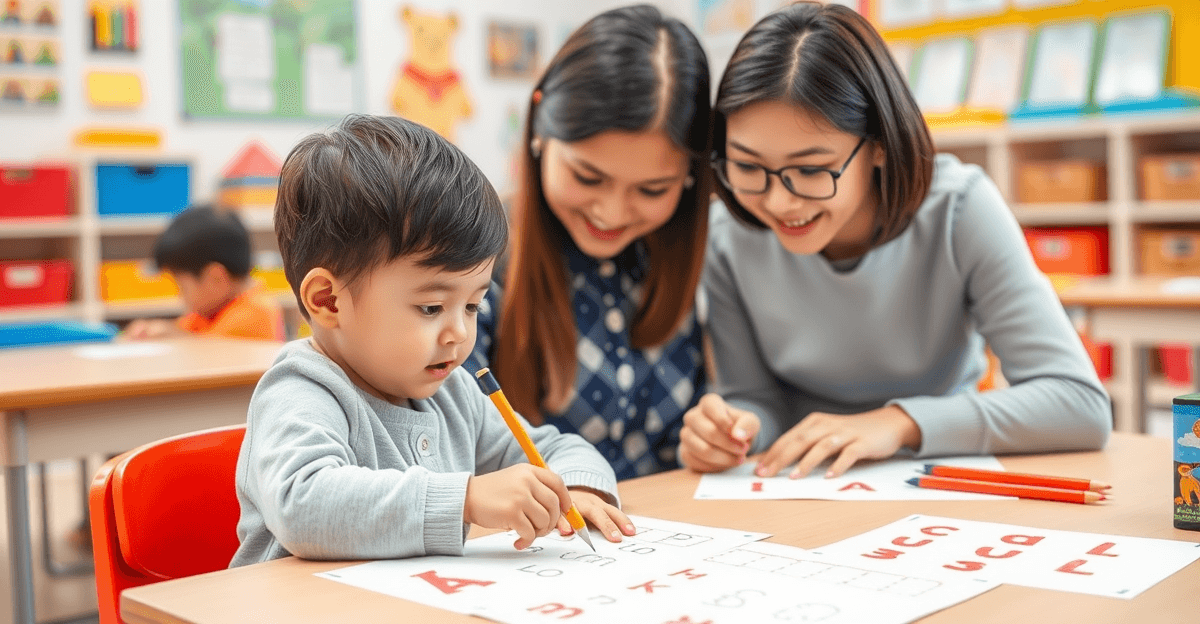
You watch your K1 child grip a pencil like a dagger, press so hard the paper tears, and produce what might be the letter A or might be a mountain range. Meanwhile, the child at the next desk writes their name in neat, evenly spaced letters. The comparison stings, even though you know you should not compare.
TL;DR: Practical guide for Singapore parents teaching K1 and K2 children to write. Handwriting readiness, letter formation, pencil grip, and when to start. Aligned with MOE expectations.
Here is what that comparison does not tell you: the child writing neatly probably started pre-writing activities earlier, has stronger hand muscles from specific play activities, and -- most importantly -- was taught in a way that matched their developmental readiness. Neat handwriting at age five is not a sign of intelligence. It is a sign of preparation.
This guide gives you the practical, step-by-step approach to teaching your preschooler to write. No expensive enrichment classes needed. No pushing your child before they are ready. Just a clear understanding of what readiness looks like, the correct progression to follow, and activities that actually build the skills your child needs.
Before the Pencil: Pre-Writing Skills (Ages 3-4)
The biggest mistake parents make is handing a child a pencil and a worksheet before their hand muscles are ready. Writing requires fine motor control, hand-eye coordination, and finger strength that most three-year-olds have not yet developed.
Think of it like this: you would not ask someone to run a marathon before they can jog around the block. Pre-writing activities are the jogging.
Essential Pre-Writing Activities
Play dough and clay. Rolling, pinching, squeezing, and shaping play dough strengthens the exact muscles needed for pencil control. Aim for 10-15 minutes of play dough time daily.
Cutting with scissors. Cutting along lines builds hand strength and bilateral coordination (using both hands together). Start with straight lines, progress to curves, then to shapes.
Threading and lacing. Threading beads onto string or lacing cards develops the pincer grip -- the same grip used to hold a pencil.
Drawing and colouring. Free drawing with crayons and markers builds hand control. Colouring within boundaries teaches spatial awareness and pencil pressure control.
Tearing paper. Tearing paper into strips and small pieces strengthens the thumb and index finger. Use the torn pieces for collages.
Pre-Writing Shapes to Master
Before letters, children should be able to draw these shapes in order of difficulty:
- Vertical line (top to bottom) -- age 2-3
- Horizontal line (left to right) -- age 2-3
- Circle -- age 2.5-3
- Cross (+) -- age 3-3.5
- Square -- age 4
- Triangle -- age 4.5-5
- Diamond -- age 5-6
If your child cannot draw a square confidently, they are not ready for letter formation. Go back to shapes, not forward to worksheets.
Step 1: The Right Pencil Grip (K1)
The tripod grip -- pencil resting between thumb and index finger, supported by the middle finger -- is the standard taught in Singapore schools. Establishing the correct grip early prevents bad habits that become extremely difficult to fix later.
How to check your child's grip:
- Thumb and index finger should pinch the pencil about 2cm from the tip
- Middle finger should support from underneath
- Ring and little fingers should curl gently into the palm
- The wrist should rest on the table, not hovering
- Movement should come from the fingers, not the whole arm
If the grip is wrong, try these tools:
- Triangular pencils (force a natural three-point hold)
- Pencil grip attachments (available at Popular for $2-5)
- Short crayons or broken crayons (too short to hold with a fist)
- The "flip trick": place pencil pointing away from child, have them pick it up with thumb and index finger, then flip it to writing position
Step 2: Letter Formation (K1-K2)
Teaching Order for Uppercase Letters
Do not teach letters alphabetically. Teach them in groups based on similar strokes.
Group 1 -- Straight lines: L, T, I, H, E, F
These letters use only vertical and horizontal lines. They are the easiest to form and build confidence quickly.
Group 2 -- Straight + diagonal: V, W, X, Y, K, Z, A, M, N
These add diagonal strokes, which are harder for young children.
Group 3 -- Curves: C, O, S, U, J
Curves require more control. Start with C (a simple open curve) and progress to S (the hardest).
Group 4 -- Combination: B, D, R, P, G, Q
These combine straight lines with curves and are the most complex.
Teaching a New Letter
Follow this sequence for each new letter:
- Show the letter. Name it, say its sound, give a word that starts with it.
- Trace it in the air. Use large arm movements while saying the formation steps ("down, across, down").
- Trace it with a finger. On sandpaper letters, in a sand tray, or on a textured surface.
- Trace it with a writing tool. Trace over dotted or grey letters on paper.
- Copy it independently. Write the letter next to a model.
- Write from memory. Write the letter without looking at a model.
This progression -- from large motor to fine motor, from guided to independent -- follows how the brain learns motor patterns.
Step 3: From Letters to Words (K2)
Once your child can write all uppercase letters from memory, begin connecting letters into meaningful words. Start with their name -- the most motivating word any child can write.
Name writing progression:
- Trace their name over dotted letters
- Copy their name from a model
- Write their name independently
- Write their name from memory
Then extend to other high-interest words: MUM, DAD, their sibling's name, their pet's name.
Introducing Lowercase Letters
Most Singapore kindergartens introduce lowercase letters in K2, once uppercase is solid. Lowercase letters are harder because they include:
- Letters that sit on the line (a, c, e, m, n, o, r, s, u, v, w, x, z)
- Letters with ascenders that go up (b, d, f, h, k, l, t)
- Letters with descenders that go down (g, j, p, q, y)
- Letters that look confusingly similar (b/d, p/q, n/u)
Teaching tip: When introducing b and d (the most commonly confused pair), teach them weeks apart, not together. Let the first letter become automatic before introducing the second.
Step 4: Writing Sentences (Late K2)
By late K2, children who have followed this progression should be able to write simple sentences: "I am Sam." "The cat is big." "I like to play."
Concepts to introduce:
- Spaces between words (use a finger space)
- Starting sentences with a capital letter
- Ending sentences with a full stop
- Writing from left to right, top to bottom
Common Writing Challenges and Solutions
"My child presses too hard"
Usually a sign of underdeveloped finger strength (paradoxically -- weak muscles compensate by using excessive force). Solution: more play dough, more cutting, more threading. Also try: writing on a whiteboard (requires less pressure), writing with markers instead of pencils, placing paper over a textured surface (the feedback helps regulate pressure).
"My child writes letters backwards"
Normal under age 7. The brain is still developing the ability to distinguish mirror images. Gentle correction is fine, but do not make it a source of stress. A useful trick: teach the child to always start letters from the top, and always start on the left side. This reduces reversals significantly.
"My child refuses to practise writing"
Forced writing practice at age 4-5 almost always backfires. Instead, make writing purposeful: write a birthday card for grandma, make a shopping list together, label their drawings, write their name on artwork. When writing has a real purpose, resistance decreases.
On QuizKin, our letter recognition and phonics quizzes build the visual awareness of letters that supports writing readiness -- without requiring any handwriting. Children who can confidently recognise and name letters find writing them much easier.
Practice Schedule by Level
K1 (Age 4-5)
- 5-10 minutes of pre-writing activities daily (play dough, cutting, drawing)
- 5 minutes of letter tracing or formation, 3-4 times per week
- Focus: uppercase letters in groups, pencil grip
- Complement with: QuizKin letter recognition quizzes for visual reinforcement
K2 (Age 5-6)
- 10-15 minutes of writing practice daily
- Include: uppercase review, lowercase introduction, name writing
- Add: simple words and CVC word practice
- Complement with: QuizKin phonics and reading quizzes to connect letters to sounds
What Primary 1 Teachers Actually Expect
Primary 1 teachers expect your child to be able to:
- Write their name legibly
- Form all uppercase letters from memory
- Recognise all lowercase letters (forming them from memory is a bonus, not a requirement)
- Hold a pencil with a functional grip (does not need to be perfect)
- Write from left to right with reasonable spacing
They do not expect:
- Perfect handwriting
- Ability to write full sentences fluently
- Mastery of lowercase letter formation
- Beautiful, uniform letter sizing
The gap between parental anxiety and school expectations is, in most cases, enormous. If your child can write their name, form uppercase letters, and hold a pencil properly, they are ready.
The Takeaway for Singapore Parents
Teaching your child to write is a marathon, not a sprint. Start with hand strength, not worksheets. Follow the developmental progression: shapes before letters, uppercase before lowercase, tracing before independent writing. Make it meaningful, keep sessions short, and celebrate effort over perfection.
If you want to build the letter recognition and phonics awareness that supports writing readiness, try QuizKin's free quizzes -- designed for Singapore K1 and K2 children. Strong readers become stronger writers, and it starts with knowing your letters.
Sources
Looking for more? Check out find a tutor for free on TuitionLah.
Exploring parenthood in Singapore? Visit ParentLah for practical tips on raising kids in Singapore.
Practise what you've read with QuizKin
Adaptive quizzes covering phonics, sight words, numbers, and more — aligned with the Singapore MOE curriculum. Free for one child.
Frequently Asked Questions
Most children are developmentally ready to begin formal writing practice between ages 4 and 5 (K1 level). Before this, focus on pre-writing skills: drawing, colouring, cutting, play dough manipulation, and tracing shapes. Forcing writing before the hand muscles are ready can lead to incorrect grip habits and frustration. Signs of readiness include: able to hold a pencil with a tripod grip, can draw basic shapes (circle, cross, square), shows interest in letters and words, and can trace lines and curves smoothly.
The ideal pencil grip is the 'dynamic tripod grip' where the pencil rests between the thumb and index finger, supported by the middle finger. The ring and little fingers curl into the palm for stability. Many K1 children start with a 'palmar grasp' (whole fist around the pencil), which is normal for 3-year-olds but should transition to a tripod grip by K1-K2. If your child struggles, use triangular pencils, pencil grips, or short broken crayons to naturally encourage the correct hold.
Start with uppercase letters. They are easier for preschoolers to form because they use mostly straight lines and simple curves (no ascenders or descenders). Most Singapore kindergartens teach uppercase first, then transition to lowercase in K2. A common teaching order is: straight-line letters first (L, T, I, H, E, F), then curved letters (C, O, S, U), then combination letters (B, D, R, P, G). Avoid teaching similar-looking letters like b and d at the same time.
Many effective handwriting activities do not involve pencils at all. Try: writing letters in sand or salt trays, forming letters with play dough, painting letters with water on outdoor walls, tracing letters in the air with big arm movements, drawing letters on each other's backs and guessing, using chalk on the void deck floor, and finger painting letters. These activities build muscle memory and letter knowledge through multi-sensory learning, which research shows is more effective than worksheet-only practice.
Yes, letter reversals are completely normal for children under age 7. The most commonly reversed letters are b and d, p and q, and numbers 3, 5, and 7. Children's brains are still developing the ability to distinguish mirror images, which is a neurological process that matures at different rates. Do not make a big issue of reversals in K1-K2 -- gently correct them but focus on whether the child understands the letter, not on perfection. If reversals persist beyond age 7 or are accompanied by significant reading difficulties, consult a learning specialist.
Ready to make learning fun?
QuizKin turns screen time into learning time with adaptive quizzes built for K1-K2 kids in Singapore. Free to start.
Related Articles
Preschool Maths Worksheets Singapore: What K1 and K2 Kids Actually Need to Learn (2026 Guide)
A parent's guide to preschool maths worksheets in Singapore. What MOE expects by Primary 1, which skills to focus on at K1 and K2, and how to make maths practice effective.

Writing Practice Apps for Kids: Helping Your Preschooler Learn to Write (Singapore)
How letter tracing apps and writing practice tools help K1-K2 children develop handwriting readiness. What to look for, how to use them, and what Singapore parents need to know.
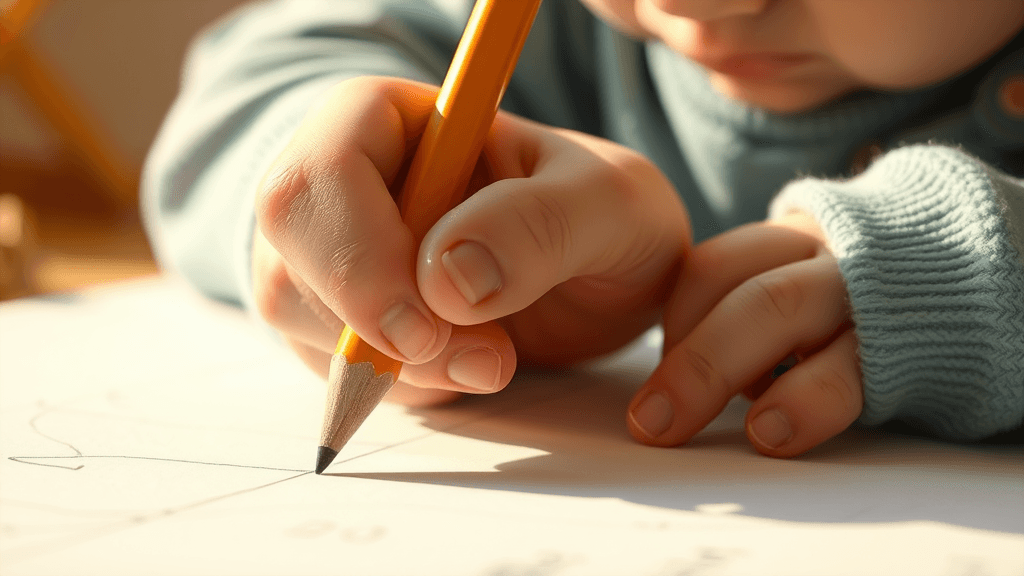
Fine Motor Skills & Handwriting Readiness for Preschoolers
Build handwriting readiness with 12 hands-on activities for preschoolers. Covers pencil grip stages, fine motor milestones, and writing tips for K1-K2.