Fine Motor Skills & Handwriting Readiness for Preschoolers
Build handwriting readiness with 12 hands-on activities for preschoolers. Covers pencil grip stages, fine motor milestones, and writing tips for K1-K2.
QuizKin Team
Published 23 April 2026
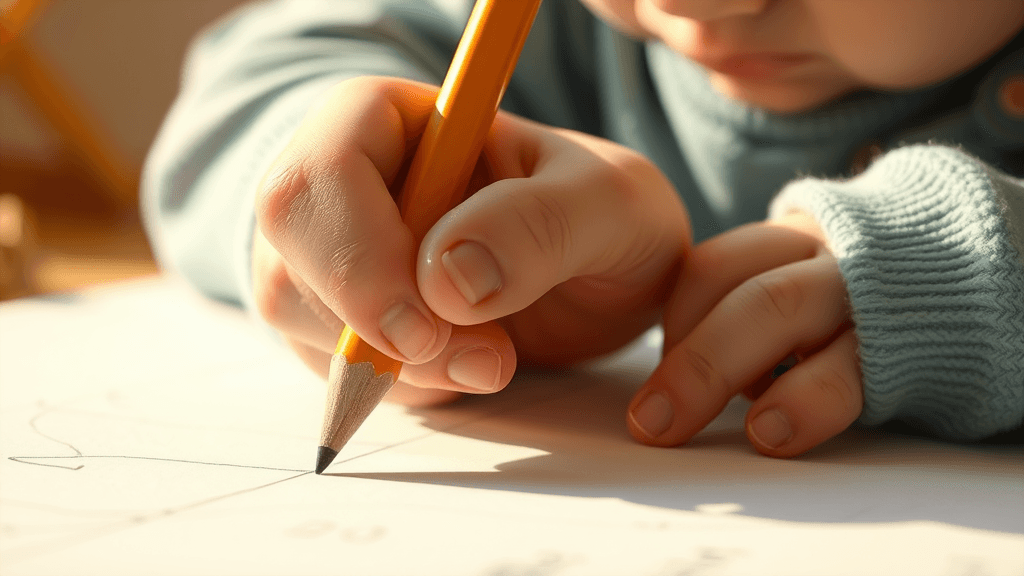
Before your child can write letters, they need something more fundamental than knowing the alphabet — they need the physical ability to control a pencil. Fine motor skills are the small, precise movements of the hands and fingers that make handwriting possible. Without adequate fine motor development, writing practice is frustrating, tiring, and ultimately unproductive.
TL;DR: Build handwriting readiness with 12 hands-on activities for preschoolers. Covers pencil grip stages, fine motor milestones, and writing tips for K1-K2.
This guide explains how fine motor skills develop in K1-K2 children, how to recognise whether your child is ready for formal handwriting practice, and provides 12 practical activities to build the hand strength and control they need.
What Are Fine Motor Skills?
Fine motor skills involve the coordination of small muscles in the hands and fingers, working with the eyes (hand-eye coordination). They control everything from holding a pencil to buttoning a shirt to picking up small objects.
For handwriting specifically, your child needs:
- Finger strength — enough power in the small muscles to grip a pencil without fatigue
- Finger isolation — the ability to move individual fingers independently
- Hand stability — a steady hand that can control precise movements
- Hand-eye coordination — the ability to direct the hand based on what the eyes see
- Bilateral coordination — using both hands together (one writes, the other holds the paper)
These skills develop gradually through everyday activities and play. They cannot be rushed, and they cannot be skipped.
Fine Motor Development: What to Expect at Each Age
Age 3-4 (Nursery)
- Holds crayons with a fist or palmar grasp
- Can draw circles, vertical lines, and horizontal lines
- Uses scissors to make random snips (not along a line)
- Strings large beads on a thick lace
- Builds towers of 6-8 blocks
Age 4-5 (K1)
- Transitions from fist grip to tripod or quadrupod pencil grip
- Copies basic shapes: circle, cross, square
- Cuts along a straight line with scissors
- Draws a person with head, body, and limbs (3-4 parts)
- Can trace over letters and simple patterns
- Begins writing their own name
Age 5-6 (K2)
- Uses a mature tripod grip consistently
- Writes uppercase and lowercase letters independently
- Copies words and short sentences
- Cuts along curved lines and simple shapes
- Draws detailed pictures with 6+ body parts
- Colours within lines more accurately
If your child is significantly behind these milestones, targeted fine motor activities (rather than more writing practice) are the most effective intervention.
The Pencil Grip: Stages and What to Do
Stage 1: Fist Grip (Age 2-3)
The child holds the pencil in their fist with the whole hand. This is normal and age-appropriate. Do not correct it at this stage.
Stage 2: Palmar Grip (Age 3-4)
The pencil rests in the palm with all fingers wrapped around it. The child starts using wrist movements rather than whole-arm movements.
Stage 3: Quadrupod Grip (Age 4-5)
The pencil is held with four fingers — thumb, index, middle, and ring finger. Movement shifts from the wrist to the fingers.
Stage 4: Tripod Grip (Age 5-6)
The pencil is held between the thumb and index finger, resting on the middle finger. This is the most efficient grip for handwriting and allows fine control with finger movements.
How to Encourage the Right Grip
Rather than forcing a specific grip, use activities and tools that naturally promote it:
- Short crayons and chalk: When crayons are too short to grip with a fist, children naturally shift to a pincer grip
- Triangular pencils: The three flat sides guide finger placement
- Pencil grips: Soft rubber grips that fit over regular pencils can guide finger position
- Vertical surfaces: Drawing on an easel or paper taped to a wall promotes wrist extension, which supports a mature pencil grip
12 Activities to Build Fine Motor Skills at Home
These activities build the specific muscles and coordination needed for handwriting. None of them require special equipment — you can do them with items you already have.
1. Playdough Play
Rolling, pinching, squeezing, and shaping playdough strengthens the small muscles of the hands. Ask your child to:
- Roll "snakes" (long thin rolls) using their fingertips, not palms
- Pinch small pieces off a larger ball
- Flatten the dough, then use cookie cutters to cut shapes
- Roll small balls using only thumb and fingertips
Playdough is one of the single most effective fine motor activities. Ten minutes daily makes a measurable difference in hand strength within weeks.
2. Threading and Lacing
String beads onto a shoelace, or lace cards (cards with holes punched around the edges). Start with large beads and thick laces, then progress to smaller beads and thinner string. This builds finger precision and hand-eye coordination.
3. Scissor Skills
Cutting with scissors develops bilateral coordination (one hand cuts, the other holds and turns the paper) and strengthens the same muscles used in writing.
Progress gradually:
- Snipping small cuts along the edge of paper
- Cutting along a thick straight line
- Cutting along curved lines
- Cutting out simple shapes (circles, squares)
Use child-safe scissors. If your child is left-handed, get left-handed scissors — this matters more than you might think.
4. Tearing and Scrunching Paper
Ask your child to tear paper into small pieces (for collage art) or scrunch sheets of newspaper into balls using only one hand. This builds finger strength and dexterity without needing any special tools.
5. Clothespin Activities
Opening and closing clothespins (pegs) requires significant finger strength. Activities:
- Clip clothespins around the edge of a container
- Use clothespins to pick up small objects (like cotton balls or pompoms)
- Create a "clothespin caterpillar" by clipping pegs onto a strip of cardboard
6. Tweezers and Tongs
Use kitchen tongs or large tweezers to pick up small items (beads, pompoms, cereal) and transfer them between bowls. This isolates the thumb-index-middle finger combination used in writing.
7. Drawing and Colouring
Free drawing builds hand control and creativity simultaneously. Provide:
- Variety of tools: crayons, markers, coloured pencils, chalk
- Different surfaces: paper, cardboard, chalkboards
- Prompts: "Draw our family," "Draw what you ate for lunch"
Colouring within lines (colouring books) builds precision, but should be balanced with free drawing so your child does not lose creative confidence.
8. Sticker Activities
Peeling stickers off a sheet and placing them precisely on a page requires pincer grip strength and finger precision. Use sticker books or create your own sticker placement activities ("Put a sticker on each circle").
9. Water Dropper Painting
Give your child a small pipette or medicine dropper and cups of coloured water. They squeeze the dropper to pick up water and release it onto paper to create art. This builds the same finger muscles used in pencil control.
10. Building with Small Blocks
LEGO, Duplo, and other construction toys require pressing, pulling, and precise placement — all excellent fine motor practice. Small LEGO bricks (for children age 4+) are particularly effective because they require significant force from small fingers.
11. Tracing Patterns and Mazes
Before writing letters, practise the movements:
- Trace dotted lines (straight, wavy, zigzag)
- Follow simple mazes with a pencil
- Connect dot-to-dot pictures
- Trace shapes (circles, squares, triangles)
These activities build pencil control without the pressure of forming specific letters.
12. Digital Letter Tracing with QuizKin
QuizKin's writing practice mode lets children trace English letters and Chinese characters on screen with their finger. The app shows animated stroke sequences, provides real-time feedback on accuracy, and progresses from tracing to independent writing as your child improves. This bridges the gap between fine motor development and actual letter formation in a low-pressure, guided environment.
Signs Your Child May Need Extra Support
Most fine motor delays are simply a matter of developmental timing — some children's hand muscles mature later than others. However, consult your child's kindergarten teacher or a paediatric occupational therapist if your child:
- Cannot hold a pencil at all by age 4
- Shows significant difficulty with daily tasks (buttons, zippers, eating with utensils)
- Avoids all drawing and colouring activities despite encouragement
- Has hand tremors or significant shakiness when attempting to write
- Shows a marked difference between left and right hand ability
Early intervention for fine motor difficulties is highly effective. Paediatric occupational therapists can provide targeted exercises and strategies.
How Fine Motor Skills Connect to Phonics and Reading
Handwriting and reading are deeply connected. Research shows that the physical act of forming letters reinforces letter recognition and phonics knowledge. When a child writes the letter "b", the motor memory of forming it (downstroke then circle) helps them distinguish it from "d" (circle then downstroke).
This is why the most effective approach for K1-K2 children is to teach letter sounds, letter recognition, and letter writing together — not sequentially. When your child is learning the sound /s/, they should also be practising how to write the letter "s." This multi-sensory approach (hearing the sound, seeing the letter, writing the letter) creates stronger neural connections than any single approach alone.
QuizKin integrates all three: phonics quizzes teach letter sounds, recognition quizzes test visual identification, and writing practice reinforces the physical formation — all within the same platform and all adapted to your child's individual level.
Practical Tips for Writing Practice Sessions
Keep Sessions Short
Five to ten minutes of focused writing practice is more effective than 30 minutes of reluctant copying. Stop before your child gets frustrated — always end on a success.
Use the Right Paper
Start with unlined paper for free writing and large-ruled paper (2 cm lines) for letter practice. Standard lined paper is too small for K1 hands. Graduate to smaller lines as control improves.
Warm Up First
Start each session with a quick hand warm-up: squeeze a stress ball 10 times, make fists and spread fingers wide 5 times, or do 30 seconds of playdough squeezing. This reduces fatigue during writing.
Encourage, Do Not Correct Constantly
If every stroke gets corrected, writing becomes stressful. Focus on effort and improvement, not perfection. "I can see you tried really hard on that letter!" is more motivating than "The line should be straighter."
Vary the Tools
Alternate between pencils, crayons, markers, and chalk. Different tools require different grip pressures and movements, which builds more versatile hand control.
Summary
Handwriting readiness is built through fine motor development, not through more writing worksheets. If your child struggles with writing, the solution is usually to step back and strengthen the underlying skills — finger strength, grip control, and hand-eye coordination — through play-based activities. Playdough, scissors, threading, drawing, and sticker activities all build the muscles your child needs. Combine these with short, positive writing practice sessions and digital tracing tools, and your child will develop the physical foundation for confident, legible handwriting.
Sources
- Fine Motor Development Milestones — Pathways.org
- Handwriting Development in Young Children — Dinehart, Journal of Early Childhood Literacy, 2015
- Nurturing Early Learners (NEL) Framework — Motor Skills Development — Ministry of Education, Singapore
Practise what you've read with QuizKin
Adaptive quizzes covering phonics, sight words, numbers, and more — aligned with the Singapore MOE curriculum. Free for one child.
Frequently Asked Questions
Most children develop a mature pencil grip (tripod or modified tripod) between ages 4 and 6. Before this, children naturally progress through several grip stages — fist grip, palmar grip, and quadrupod grip. Forcing a correct grip too early can create frustration. If your child is still using a fist grip at age 5, gently encourage a tripod grip using pencil grips or short crayons, but do not stress if it takes time.
Not necessarily. Many children resist writing because they lack the fine motor strength to control a pencil comfortably, making the activity physically tiring and frustrating. Instead of pushing through resistance, build strength through play — playdough, threading beads, cutting with scissors, and other fine motor activities. Once their hand muscles are stronger, writing becomes easier and resistance typically decreases.
Most Singapore kindergartens teach uppercase letters first because they are easier to write — they use mainly straight lines and simple curves. Once children are comfortable with uppercase, they progress to lowercase letters, which require more complex strokes (curves, ascenders, descenders). Follow your child's kindergarten approach to maintain consistency.
For K1 children (age 5), 5 to 10 minutes of writing practice per day is sufficient. This might be tracing 5-6 letters or writing a few short words. More important than writing duration is the variety of fine motor activities throughout the day — playdough, drawing, cutting, threading, and manipulating small objects all build the same hand muscles needed for writing.
Yes. Letter reversals (writing b as d, or writing letters mirror-imaged) are developmentally normal in children under age 7. This is not a sign of dyslexia at the preschool stage. Most children outgrow reversals naturally as their visual-spatial processing matures. If reversals persist beyond age 7 or are accompanied by other learning difficulties, consult your child's school or an educational psychologist.
Ready to make learning fun?
QuizKin turns screen time into learning time with adaptive quizzes built for K1-K2 kids in Singapore. Free to start.
Related Articles

Sensory Play Activities for Preschoolers in Singapore: 20 Ideas That Build Real Skills (2026)
20 sensory play activities for preschoolers in Singapore. Develop fine motor skills, language, and focus through hands-on exploration. Indoor and outdoor ideas for K1 and K2 kids.
How to Teach Your Preschooler to Write in Singapore: A Step-by-Step Guide for Parents (2026)
Practical guide for Singapore parents teaching K1 and K2 children to write. Handwriting readiness, letter formation, pencil grip, and when to start. Aligned with MOE expectations.
Teaching Numbers & Counting to Preschoolers (Singapore)
Teach your K1-K2 child numbers and counting with 10 fun activities. Covers number recognition, counting skills, and basic addition for Singapore parents.