Speech & Language Development in Preschoolers (Singapore Guide)
Is your child's speech on track? Age-by-age milestones for 3-6 year olds, signs of delay, when to see a therapist, and how to support language at home.
QuizKin Team
Published 24 April 2026
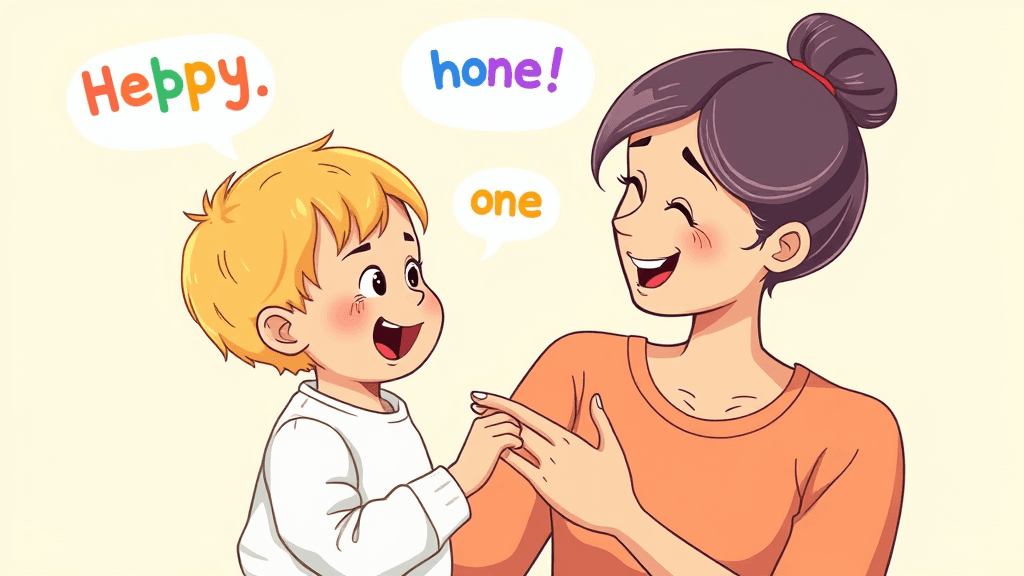
Every parent notices it at some point — at the playground, at a family gathering, or during a kindergarten parent-teacher meeting. Another child the same age seems to speak more clearly, use longer sentences, or communicate more confidently than yours. The worry sets in: is my child behind?
TL;DR: Is your child's speech on track? Age-by-age milestones for 3-6 year olds, signs of delay, when to see a therapist, and how to support language at home.
The truth is that speech and language development varies enormously between children, even within the same age group. Some children speak in full sentences at age 3, while others take until age 4 or 5 to become fully intelligible. Most variation is normal. But some delays do need attention, and early identification makes a significant difference.
This guide covers age-by-age speech milestones for Singapore preschoolers, how to tell the difference between normal variation and genuine delay, when and where to seek help in Singapore, and practical strategies to support your child's language development at home.
Speech vs Language: Understanding the Difference
Before looking at milestones, it helps to understand that "speech" and "language" are not the same thing.
Speech refers to the physical production of sounds — how clearly your child pronounces words, whether they can make specific sounds (like "r" or "th"), and the fluency and rhythm of their talking.
Language refers to the system of communication — vocabulary, grammar, sentence structure, and the ability to understand and express meaning. Language has two components:
- Receptive language is what your child understands (can they follow instructions? do they understand questions?)
- Expressive language is what your child can say (can they describe events? ask questions? tell a story?)
A child can have clear speech but poor language skills (they pronounce words perfectly but have limited vocabulary). Conversely, a child can have strong language but unclear speech (they know many words and use complex sentences, but their pronunciation is hard to understand). Both patterns are common and require different approaches.
Age-by-Age Speech and Language Milestones
These milestones are based on guidelines from the American Speech-Language-Hearing Association (ASHA), adapted with Singapore-specific context. Remember that these are approximate — children typically achieve milestones within a range, not on an exact date.
Age 3 (Nursery)
Speech milestones:
- Familiar listeners (parents, siblings) understand about 75 percent of what the child says
- Can produce most vowel sounds and early consonants: p, b, m, n, t, d, w, h
- May still struggle with: f, s, z, l, r, sh, ch, th (this is normal)
- Speaks in sentences of 3 to 4 words
Language milestones:
- Vocabulary of approximately 200 to 1,000 words (wide range is normal)
- Uses simple sentences: "I want juice," "Mummy go work"
- Understands simple questions: who, what, where
- Follows two-step instructions: "Pick up the ball and give it to me"
- Begins to use plurals (cats, dogs) and past tense (walked, played)
Age 4 (K1)
Speech milestones:
- Strangers can understand about 75 to 90 percent of what the child says
- Can produce: p, b, m, n, t, d, k, g, f, w, h, y, ng
- May still struggle with: s, z, l, r, sh, ch, th, j (still normal at this age)
- Speaks in sentences of 4 to 6 words
Language milestones:
- Vocabulary of approximately 1,000 to 2,000 words
- Uses complete sentences with correct grammar most of the time
- Can retell a simple story or describe what happened at school
- Asks many "why" and "how" questions
- Understands concepts like big/small, in/on/under, same/different
- Follows three-step instructions: "Wash your hands, get your plate, and sit down"
Age 5 (K2)
Speech milestones:
- Strangers understand 90 to 100 percent of what the child says
- Can produce most sounds correctly, including f, v, s, z, sh, ch, j
- May still have difficulty with: r, th, l (these are later-developing sounds)
- Speech sounds natural in rhythm and fluency
Language milestones:
- Vocabulary of approximately 2,000 to 5,000 words
- Uses complex sentences with conjunctions: "I want to go to the park because it has a big slide"
- Can define simple words: "What is a ball? Something you throw"
- Understands time concepts: yesterday, today, tomorrow
- Can have a sustained back-and-forth conversation on a topic
- Tells stories with a beginning, middle, and end
Age 6 (Entering Primary 1)
Speech milestones:
- Speech is fully intelligible to all listeners
- Most children can produce all speech sounds, though "r" and "th" may still be developing
- No significant articulation errors that interfere with communication
Language milestones:
- Vocabulary of 5,000 or more words
- Uses correct grammar in most sentences
- Can explain how things work, describe events in detail, and predict outcomes
- Understands jokes and figurative language
- Can follow complex instructions with multiple steps
Red Flags: When to Seek Professional Help
Normal variation is wide, but certain patterns should prompt a professional assessment. Consult a speech-language therapist if your child shows any of the following:
At any age:
- Lost speech or language skills they previously had (regression)
- Does not respond to their name consistently by age 2
- Does not point or gesture to communicate by age 15 months
- Shows no interest in communicating with others
By age 3:
- Is not combining two words together ("more milk," "daddy go")
- Cannot be understood by familiar listeners most of the time
- Does not follow simple instructions
By age 4:
- Cannot be understood by people outside the family
- Uses sentences shorter than 3 words
- Cannot retell what happened during the day
- Does not ask questions
By age 5:
- Still has significant sound errors that affect intelligibility
- Cannot tell a simple story
- Struggles to have a back-and-forth conversation
- Does not understand concepts like first/last, same/different
By age 6 (entering P1):
- Speech is noticeably unclear compared to same-age peers
- Has difficulty following classroom instructions
- Struggles significantly with phonics despite adequate instruction
- Cannot retell a story they just heard
Where to Get Help in Singapore
Singapore has a well-developed network of speech therapy services for children. Here are the main pathways:
Public Hospitals and Polyclinics
KK Women's and Children's Hospital (KKH) has one of the largest paediatric speech therapy departments in Singapore. Referral through a polyclinic or paediatrician is typically required. Wait times can be 2 to 4 months for an initial assessment. Subsidised rates apply for Singapore citizens.
National University Hospital (NUH) offers paediatric speech therapy through the Department of Otolaryngology. Similar referral and subsidisation processes as KKH.
Polyclinics can provide initial screening and referral to hospital-based speech therapy. This is often the fastest route into the public system.
Private Speech Therapy Clinics
Private clinics offer faster access (usually within 1 to 2 weeks) but at higher cost ($120 to $250 per session). Some well-regarded options for preschool-age children include clinics in the Novena, Bukit Timah, and Toa Payoh areas. Ask your kindergarten for recommendations specific to your neighbourhood.
EIPIC (Early Intervention Programme for Infants and Children)
For children aged 0 to 6 with developmental needs, the EIPIC programme provides subsidised early intervention, including speech therapy. Referral is through KKH or NUH, and services are provided at EIPIC centres across Singapore. This programme is significantly subsidised for Singapore citizens.
School-Based Support
Many kindergartens have Learning Support programmes or partnerships with speech therapists who visit the school. Ask your child's teacher if in-school support is available — this has the advantage of addressing speech needs within the classroom context.
10 Strategies to Support Speech and Language at Home
Professional therapy is important when needed, but the most powerful tool for language development is what happens at home every day. Here are 10 evidence-based strategies.
1. Talk About Everything You Do
Narrate your daily activities. "I am cutting the carrots. Look — the carrots are orange. I am going to put them in the pot." This running commentary exposes your child to rich, contextual language. Use full sentences, descriptive words, and varied vocabulary. This technique, sometimes called "sportscasting," is one of the most effective ways to build language.
2. Follow Your Child's Lead
When your child is interested in something — a bug on the ground, a truck driving past, a toy they are playing with — talk about it. Language learning is most effective when it is connected to what the child is currently focused on. Resist the urge to redirect their attention to something "more educational."
3. Expand on What Your Child Says
When your child says something, repeat it back with additional words. If they say "big truck," you say "Yes, that is a big red truck! It is driving very fast." This technique, called expansion, models correct grammar and richer vocabulary without correcting the child.
4. Read Aloud Daily — Interactively
Reading aloud is the single most impactful activity for language development. But how you read matters more than how much you read. Ask questions ("What do you think will happen next?"), point out details in the pictures, connect the story to your child's experiences, and let your child turn the pages and point to things that interest them.
Aim for at least 15 minutes of interactive reading per day — in both English and Mother Tongue.
5. Ask Open-Ended Questions
Replace yes/no questions with questions that require longer answers. Instead of "Did you have fun at school?" try "What was the best thing that happened at school today?" Instead of "Do you want rice?" try "What would you like for dinner?" Open-ended questions require your child to formulate thoughts into language, which builds expressive skills.
6. Give Processing Time
Young children need more time to formulate their responses than adults. After asking a question, wait 5 to 10 seconds before jumping in or answering for them. This wait time is especially important for children who are quieter or who have emerging language skills.
7. Limit Background Noise
Constant background noise — television, music, conversations — makes it harder for young children to process speech. During meals, play, and reading time, turn off the television and reduce background noise. This helps your child focus on the language directed at them.
8. Sing Songs and Nursery Rhymes
Songs and rhymes build phonological awareness — the ability to hear and manipulate the sounds of language. This skill is foundational for both speech clarity and later reading development. Rhymes highlight sound patterns, and the repetitive nature of songs helps children practise pronunciation.
9. Play Pretend
Pretend play is a language-rich activity. When children play "restaurant" or "doctor" or "school," they are practising conversation, narrative skills, and vocabulary in a meaningful context. Join their pretend play and introduce new vocabulary naturally. "Oh, is the patient sick? Does the patient have a fever? Let me check the patient's temperature."
10. Use Educational Apps Strategically
Apps that require verbal participation can reinforce speech sounds and vocabulary. QuizKin's phonics mode uses real human voice recordings of all 42 letter sounds, providing clear models for children to imitate. Encourage your child to say each sound aloud as they practise, rather than silently tapping answers. This turns app time into active speech practice.
However, app time should supplement — never replace — face-to-face conversation and reading aloud.
Bilingual Families: Special Considerations
Singapore's bilingual environment raises specific questions about speech development. Here are the key facts:
Bilingualism does not cause speech delay. If your bilingual child has a speech delay, reducing one language will not help. Continue exposing them to both languages. Speech therapists in Singapore are experienced with bilingual children and can assess both languages.
Assess in both languages. A child who appears delayed in English may be age-appropriate in Mother Tongue, or vice versa. A comprehensive assessment should evaluate both languages. Many speech therapists in Singapore are themselves bilingual and can assess in Mandarin, Malay, or Tamil.
Code-switching is not a disorder. Mixing languages in a sentence is a normal bilingual behaviour, not a sign of confusion or delay.
For more on supporting bilingual development, see our guide on balancing English and Mother Tongue at home.
What to Expect from Speech Therapy
If your child is referred for speech therapy, here is what the process typically looks like in Singapore:
Initial assessment (1 to 2 sessions). The therapist evaluates your child's speech sounds, language comprehension, expressive language, and social communication. They may use standardised tests and play-based observation. You will receive a report with findings and recommendations.
Therapy sessions (typically weekly or fortnightly). Sessions are usually 30 to 45 minutes and involve structured activities targeting specific skills. For preschoolers, therapy is play-based — the child may not even realise they are in "therapy."
Home practice. The therapist will give you activities to practise at home between sessions. Consistency with home practice is one of the strongest predictors of therapy success. Expect to spend 10 to 15 minutes per day on recommended activities.
Duration. Some children need only 3 to 6 months of therapy. Others may need a year or more. Progress depends on the nature and severity of the delay, the child's age, and the consistency of practice.
Key Takeaways
- Speech and language are different skills — a child can have clear speech but poor language, or vice versa.
- Normal variation is wide. Do not compare your child to a single "ideal" milestone chart.
- Red flags worth professional assessment: loss of previously acquired skills, unintelligible speech at age 4, inability to follow age-appropriate instructions, or no interest in communicating.
- The home environment is the most powerful tool for language development. Talk more, read more, ask questions, and follow your child's interests.
- Bilingualism does not cause speech delay. Continue both languages.
- Early intervention is highly effective. If in doubt, seek an assessment — there is no downside to checking.
- QuizKin can support speech sound practice through phonics exercises with real human voice recordings, but apps should complement — not replace — conversation and reading aloud.
Your child's language development in the preschool years lays the foundation for all future learning. The time you invest in talking, reading, and listening now will pay dividends throughout their school years and beyond.
Sources
- KKH — KK Women's and Children's Hospital
- HealthHub Singapore
- ECDA — Early Childhood Development Agency
Looking for more? Check out find a tutor for free on TuitionLah.
Exploring parenthood in Singapore? Visit ParentLah for practical tips on raising kids in Singapore.
Practise what you've read with QuizKin
Adaptive quizzes covering phonics, sight words, numbers, and more — aligned with the Singapore MOE curriculum. Free for one child.
Frequently Asked Questions
Key signs to watch for at age 4 include: strangers cannot understand most of what your child says (family members may understand but outsiders cannot), your child uses fewer than 4-word sentences, they cannot retell a simple story or describe what happened at school, they struggle to follow two-step instructions ('put your shoes on and come to the kitchen'), or they have difficulty with basic sounds like p, b, m, t, d, n, k, g. If you observe several of these signs, consult a speech-language therapist for an assessment.
Speech therapy costs in Singapore vary depending on the provider. At public hospitals (KK Women's and Children's Hospital, NUH), subsidised rates for Singapore citizens range from $20 to $60 per session after government subsidies. Private speech therapy clinics typically charge $120 to $250 per session. Some polyclinics offer speech therapy referrals. Insurance may cover speech therapy if it is medically indicated — check with your provider.
No. Research consistently shows that bilingualism does not cause speech delay. Bilingual children reach speech milestones at the same age as monolingual children. If a bilingual child has a speech delay, the delay would exist regardless of how many languages they are exposed to. Reducing language exposure — such as stopping Mother Tongue — does not help and is not recommended by speech-language therapists.
Developmental stuttering is common in children aged 2 to 5 and occurs in about 5 percent of preschoolers. Most children outgrow it naturally within 6 to 12 months. However, consult a speech therapist if the stuttering lasts longer than 6 months, increases in frequency or severity, is accompanied by physical tension (eye blinking, jaw tightening), or if your child becomes visibly frustrated or avoids speaking. Early intervention for persistent stuttering is highly effective.
Educational apps can support — but not replace — speech and language development. Apps that require active verbal participation (naming objects, reading aloud, repeating sounds) are more beneficial than passive viewing apps. QuizKin's phonics quizzes, which use real human voice recordings and encourage children to practise letter sounds aloud, can reinforce speech sound development. However, apps should complement face-to-face conversation and reading aloud, which remain the most effective ways to build language skills.
Ready to make learning fun?
QuizKin turns screen time into learning time with adaptive quizzes built for K1-K2 kids in Singapore. Free to start.
Related Articles
My Child Is Not Reading Yet: A Singapore Parent's Guide (K1-K2)
Your K1 or K2 child is not reading while classmates are. When to worry, when to wait, and practical steps to support a late or reluctant reader in Singapore.
Enrichment Classes vs Home Learning: What Works for K1-K2 Kids
Should you send your K1-K2 child for enrichment classes? Compare costs, effectiveness, and alternatives. A practical guide for Singapore parents on a budget.
15 Fun Learning Activities for Preschoolers at Home (Singapore)
15 easy learning activities for K1-K2 kids at home. Covers phonics games, numeracy play, science experiments, and creative projects for Singapore parents.