Enrichment Classes vs Home Learning: What Works for K1-K2 Kids
Should you send your K1-K2 child for enrichment classes? Compare costs, effectiveness, and alternatives. A practical guide for Singapore parents on a budget.
QuizKin Team
Published 24 April 2026
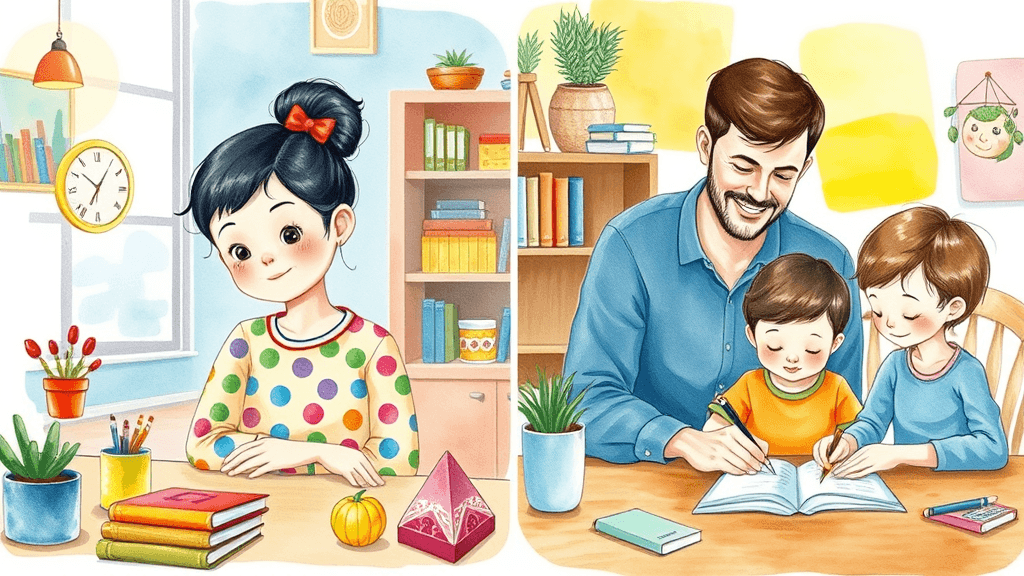
Singapore has an enrichment class for everything. Phonics at age 3. Mandarin tuition at age 4. Coding camps at age 5. By K1, many children have schedules that would exhaust a corporate executive — kindergarten from 8 am to 1 pm, followed by enrichment classes three or four afternoons a week.
TL;DR: Should you send your K1-K2 child for enrichment classes? Compare costs, effectiveness, and alternatives. A practical guide for Singapore parents on a budget.
The enrichment industry in Singapore is worth over $1 billion annually, and the pressure to participate starts in preschool. Other parents are signing up. Your child's kindergarten classmates are going for phonics, for abacus, for creative writing. You wonder: if I do not sign up, will my child fall behind?
This guide examines the evidence — what the research says about enrichment for preschoolers, where the money is well spent, where it is wasted, and what alternatives deliver equal or better results for a fraction of the cost and time commitment.
The Singapore Enrichment Landscape in 2026
What Parents Are Spending
A 2024 survey by the Institute of Policy Studies found that Singapore families spend an average of $500 to $800 per month on enrichment and tuition per child. For families with children in the K1-K2 age range, the most common enrichment areas are:
- Language and literacy — phonics programmes, creative writing, speech and drama (most popular)
- Mother Tongue — Mandarin enrichment, higher Chinese preparation
- Mathematics — Kumon, abacus, Singapore Maths programmes
- Swimming — nearly universal, often starting from age 3
- Arts and music — art classes, piano, violin, dance
- Sports — gymnastics, martial arts, football
- STEM — coding, robotics, science exploration (increasingly popular)
The average family with two enrichment classes per child is spending $400 to $800 per month. Families with three or four classes easily spend $1,000 to $1,500 per child per month.
The Pressure Loop
The enrichment pressure operates as a social loop: parents sign up because other parents are signing up, which creates a perceived norm, which pressures more parents to sign up. This is reinforced by marketing from enrichment centres that implies children who do not attend will fall behind — a claim with very little evidence behind it.
The result is that many Singapore preschoolers have overscheduled afternoons, limited free play time, and parents who feel guilty no matter what they choose.
What the Research Says
The Evidence for Academic Enrichment
For children aged 4 to 6, the research on academic enrichment (phonics programmes, maths tuition, reading classes) is clear: the quality of learning at home and in kindergarten matters far more than whether the child attends enrichment classes.
A longitudinal study by NIE Singapore found no significant difference in P1 readiness between children who attended academic enrichment and those who did not, after controlling for home environment factors. The children who performed best at P1 entry were not those who attended the most classes — they were those whose parents read to them daily, engaged them in conversation, and provided a language-rich home environment.
This does not mean enrichment has zero value. But it means the marginal benefit of adding enrichment classes on top of a good kindergarten and engaged home learning is small, especially for children whose development is on track.
When Enrichment Does Help
Enrichment is most beneficial in three specific scenarios:
1. Your child has a genuine gap or difficulty. If your child is struggling with phonics and you are unable to provide the structured support they need at home (due to time, language ability, or confidence), a quality phonics programme can help close the gap. Similarly, if your child has limited Mother Tongue exposure at home, Mandarin or Tamil enrichment provides necessary language input. These are targeted interventions, not general enrichment.
2. Your child has a strong interest. If your child is genuinely passionate about art, music, or a sport, enrichment classes provide instruction and social interaction that home learning cannot replicate. The key word is "genuine" — this is about following your child's interest, not projecting your aspirations onto them.
3. The enrichment is physical or social. Swimming, sports, dance, martial arts, and group music classes provide physical development, social interaction, and discipline training that are difficult to replicate at home. These have the strongest evidence base for positive outcomes in the preschool years.
When Enrichment Is Counterproductive
Enrichment becomes counterproductive when:
- It displaces play. Free, unstructured play is not a luxury — it is essential for cognitive, social, and emotional development. Children who have no free play time because every afternoon is scheduled are missing a critical developmental input.
- It creates stress. A 4-year-old who associates learning with pressure, competition, and performance anxiety is being set up for a problematic relationship with education. The preschool years should build a love of learning, not extinguish it.
- It teaches content that kindergarten already covers. If your child's kindergarten teaches phonics, paying separately for a phonics enrichment class means your child is getting the same content twice. The money would be better spent on something their kindergarten does not offer.
- It is passive. Enrichment where the child sits and listens to a teacher talk, or fills out worksheets, is far less effective than interactive, play-based learning. If the enrichment class looks like school, it probably is not worth the money.
Subject-by-Subject Analysis
Phonics and English Literacy
Enrichment cost: $200 to $500 per month (I Can Read, Julia Gabriel, Berries, etc.)
What you get: Systematic phonics instruction, sight word practice, small group interaction, professional instruction.
The alternative: Your child's kindergarten almost certainly teaches phonics already. At home, spend 15 minutes daily on phonics activities. Use a phonics app like QuizKin for structured practice ($0 to $10/month). Read aloud daily. This combination is equivalent to or better than most enrichment programmes for children without specific difficulties.
Verdict: Unnecessary for most children if parents can commit to 15 minutes of daily home practice. Worth considering if your child has specific literacy difficulties or if English is not spoken at home.
Mandarin / Mother Tongue
Enrichment cost: $150 to $400 per month
What you get: Additional Mother Tongue exposure, structured character learning, conversation practice, cultural context.
The alternative: Increase Mother Tongue exposure at home through the strategies in our bilingual learning guide. Read Mother Tongue books daily. Use Chinese media (cartoons, songs) strategically. Leverage grandparent time for Mother Tongue conversation. Use QuizKin's Chinese character tracing for daily practice.
Verdict: Potentially worthwhile if Mother Tongue is not spoken at home at all. For families with some Mother Tongue at home, increasing home exposure is usually more effective and sustainable than weekly enrichment. The research shows that daily home exposure matters more than weekly class exposure.
Mathematics
Enrichment cost: $120 to $300 per month (Kumon, Seriously Addictive Maths, abacus)
What you get: Structured practice, procedural fluency through repetition, small group instruction.
The alternative: Integrate numeracy into daily life — counting objects, measuring ingredients while cooking, spotting numbers on signs, playing board games that involve counting. Use QuizKin's number quizzes for structured practice. This builds conceptual understanding, not just procedural skill.
Verdict: The weakest case for enrichment at the K1-K2 level. The kindergarten maths curriculum covers everything needed for P1 readiness. Kumon-style worksheet repetition can be useful for some children but risks creating negative associations with maths if forced. Save maths enrichment for Primary school if needed.
Swimming
Enrichment cost: $100 to $250 per month
What you get: A life skill, physical fitness, water safety, confidence.
Verdict: One of the most worthwhile enrichment activities. Swimming is a life skill that cannot be taught through books or apps, provides excellent physical exercise, and Singapore's tropical climate means children encounter water regularly. Most early childhood experts consider swimming the single most valuable enrichment activity for preschoolers.
Arts and Music
Enrichment cost: $100 to $400 per month
What you get: Creative expression, fine motor development, aesthetic appreciation, potential talent discovery.
Verdict: Worthwhile if your child shows genuine interest. Art and music develop creativity, fine motor skills, and self-expression — qualities that are difficult to test but valuable for life. Do not treat arts enrichment as a resume builder. Treat it as an opportunity for your child to explore and enjoy creativity.
Sports and Physical Activities
Enrichment cost: $100 to $300 per month (gymnastics, martial arts, football, dance)
What you get: Physical fitness, coordination, social skills, discipline, confidence.
Verdict: Highly recommended. Children need at least 60 minutes of physical activity daily. Structured sports teach skills that free play alone may not — listening to a coach, working as a team, practising a skill repeatedly, handling competition. Choose a sport your child enjoys, not one you wish you had done as a child.
STEM (Coding, Robotics, Science)
Enrichment cost: $200 to $500 per month
What you get: Introduction to logical thinking, problem-solving, technology literacy.
Verdict: Least necessary at the K1-K2 age. Children at this stage develop computational thinking far more effectively through building blocks, puzzles, pattern activities, and hands-on science experiments than through formal coding classes. Save coding and robotics for Primary school when abstract thinking develops further.
The Home Learning Alternative: A Practical Plan
Here is a practical weekly plan that covers the same developmental areas as a typical enrichment schedule, using home activities and educational technology.
Daily (15-20 Minutes Each)
English literacy. Read aloud together (10 minutes). Practise phonics or sight words using QuizKin or hands-on activities (10 minutes). Total: 20 minutes.
Mother Tongue. Read a Mother Tongue book or practise Chinese characters using QuizKin (10 minutes). Have a Mother Tongue conversation during a meal or activity (10 minutes). Total: 20 minutes.
Numeracy. Count objects during daily activities, play a number game, or use QuizKin's number quizzes (10 minutes). No formal "lesson" needed — counting naturally during the day is sufficient.
Free play. At least 60 minutes of unstructured play — building, drawing, pretend play, outdoor play. This is not a luxury to cut when time is tight. It is a developmental necessity.
Weekly
Art and creativity. One or two art sessions using materials at home — paint, playdough, collage, drawing. No instruction needed. Let your child create freely.
Science exploration. One simple science activity per week — growing a seed, mixing colours, exploring magnets, observing insects. Curiosity-driven, not worksheet-driven.
Physical activity. Daily outdoor play plus one structured physical activity — a trip to the swimming pool, a family bike ride, playground time with climbing and balancing.
Social time. One or two playdates per week. Unstructured play with other children builds social-emotional skills more effectively than any enrichment class.
Monthly Cost Comparison
Typical enrichment schedule (phonics + Mandarin + maths): $600 to $1,200 per month
Home learning alternative (QuizKin Premium + library card + art supplies + weekly swimming): $100 to $300 per month
The savings: $500 to $900 per month, or $6,000 to $10,800 per year. Over the K1-K2 period, that is $12,000 to $21,600 — enough to fund a family holiday, start an education savings fund, or simply reduce financial stress.
How to Decide: A Framework
Use these four questions to evaluate any enrichment class:
1. Does my child's kindergarten already cover this?
If yes, enrichment is duplicating content. Your money and time are better spent elsewhere.
2. Can I do this effectively at home?
For phonics, sight words, numeracy, and Mother Tongue — yes, with 15 to 20 minutes of daily effort and tools like QuizKin. For swimming, group sports, and specialised music instruction — no, these need a professional setting.
3. Is my child genuinely interested?
A child who asks to go to art class is different from a child who cries before every session. Follow their interests, not the crowd.
4. Does this displace play or rest?
If adding the enrichment class means your child has no free play time, the net effect on development is likely negative, regardless of what the class teaches.
The QuizKin Approach: Enrichment-Quality Learning at Home
QuizKin was built as an alternative to enrichment classes for foundational academic skills. Here is what it provides:
Systematic phonics instruction. All 42 letter sounds with real human voice recordings, blending practice, and progressive difficulty — the same content as a $300/month phonics programme.
Sight word practice. K1 and K2 sight word lists with spaced repetition for long-term retention.
Chinese character writing. Stroke-by-stroke tracing guidance with correct stroke order — equivalent to the handwriting component of Mandarin enrichment.
Adaptive difficulty. The app adjusts to your child's level automatically, ensuring they are always practising in the zone of productive challenge — something group enrichment classes cannot offer because they teach to the average level.
Cost. Free tier available. Premium at a fraction of the cost of a single enrichment class.
The app does not replace everything. It does not teach swimming or art or social skills. But for the academic foundation that most enrichment spending targets — phonics, sight words, Chinese characters, numeracy — it provides equivalent or better instruction at a fraction of the cost.
Key Takeaways
- Academic enrichment classes are not necessary for most K1-K2 children. The kindergarten curriculum, combined with engaged home learning, is sufficient for Primary 1 readiness.
- Swimming, sports, and arts are the most worthwhile enrichment categories for preschoolers.
- The most effective learning investment is not a class — it is 15 to 20 minutes of daily reading and practice at home.
- Free, unstructured play is not optional. It is essential for development.
- Educational apps like QuizKin can replace academic enrichment at a fraction of the cost.
- Before signing up, ask: Does kindergarten cover this? Can I do it at home? Is my child interested? Does it displace play?
- The savings from skipping unnecessary enrichment ($6,000 to $10,800 per year) can be redirected to more impactful uses — family experiences and attractions, education savings, or reducing financial pressure.
The best investment in your child's education is not a programme — it is your time. Twenty minutes a day of reading, talking, and playing together will do more for your child's development than any enrichment schedule.
Sources
Looking for more? Check out find a tutor for free on TuitionLah.
Exploring parenthood in Singapore? Visit ParentLah for practical tips on raising kids in Singapore.
Practise what you've read with QuizKin
Adaptive quizzes covering phonics, sight words, numbers, and more — aligned with the Singapore MOE curriculum. Free for one child.
Frequently Asked Questions
No. Enrichment classes are not necessary for preschoolers. The kindergarten curriculum in Singapore, guided by the MOE NEL framework, is designed to prepare children for Primary 1 without additional tuition or enrichment. Research consistently shows that play-based learning, reading at home, and parental engagement are more effective than formal enrichment for K1-K2 children. Enrichment can be beneficial if your child has a genuine interest in a specific area, but it is not a requirement for academic success.
Enrichment class fees in Singapore vary widely. Phonics programmes (e.g., I Can Read, Julia Gabriel) typically cost $200 to $500 per month. Mandarin enrichment runs $150 to $400 per month. Maths enrichment (e.g., Kumon, Seriously Addictive Maths) costs $120 to $300 per month. Art classes range from $100 to $250 per month. A typical Singapore family spending on 2 to 3 enrichment classes can easily reach $600 to $1,200 per month per child.
If you choose to enrol your child in enrichment, the most evidence-backed areas are swimming (life skill and physical development), a second language (if home exposure is limited), and phonics or reading if your child is struggling and you are unable to support them at home. Sports and arts enrich social-emotional development through play and creativity. Academic enrichment (maths, science, coding) has the weakest evidence base for preschool-age children.
Kumon's worksheet-based approach is effective for building procedural fluency in maths and reading through repetition. However, for K1-K2 children, the repetitive worksheet format can create negative associations with learning if overused. Most early childhood experts recommend hands-on, play-based maths and reading activities for preschoolers, with worksheets playing a minor supporting role. If your child enjoys Kumon and is progressing well, it can be helpful. If they resist it, forced participation is counterproductive.
For foundational skills like phonics, sight words, and numeracy, well-designed educational apps can be as effective as or more effective than group enrichment classes for preschoolers. Apps offer adaptive difficulty, immediate feedback, consistent daily practice, and much lower cost. QuizKin, for example, provides the same phonics and sight word instruction as a $300/month phonics programme for a fraction of the cost. However, apps cannot replace activities that require social interaction, physical movement, or hands-on materials — swimming, sports, music, and art are best done in person.
Ready to make learning fun?
QuizKin turns screen time into learning time with adaptive quizzes built for K1-K2 kids in Singapore. Free to start.
Related Articles
15 Fun Learning Activities for Preschoolers at Home (Singapore)
15 easy learning activities for K1-K2 kids at home. Covers phonics games, numeracy play, science experiments, and creative projects for Singapore parents.
My Child Is Not Reading Yet: A Singapore Parent's Guide (K1-K2)
Your K1 or K2 child is not reading while classmates are. When to worry, when to wait, and practical steps to support a late or reluctant reader in Singapore.
Speech & Language Development in Preschoolers (Singapore Guide)
Is your child's speech on track? Age-by-age milestones for 3-6 year olds, signs of delay, when to see a therapist, and how to support language at home.