Teaching Numbers & Counting to Preschoolers (Singapore)
Teach your K1-K2 child numbers and counting with 10 fun activities. Covers number recognition, counting skills, and basic addition for Singapore parents.
QuizKin Team
Published 23 April 2026
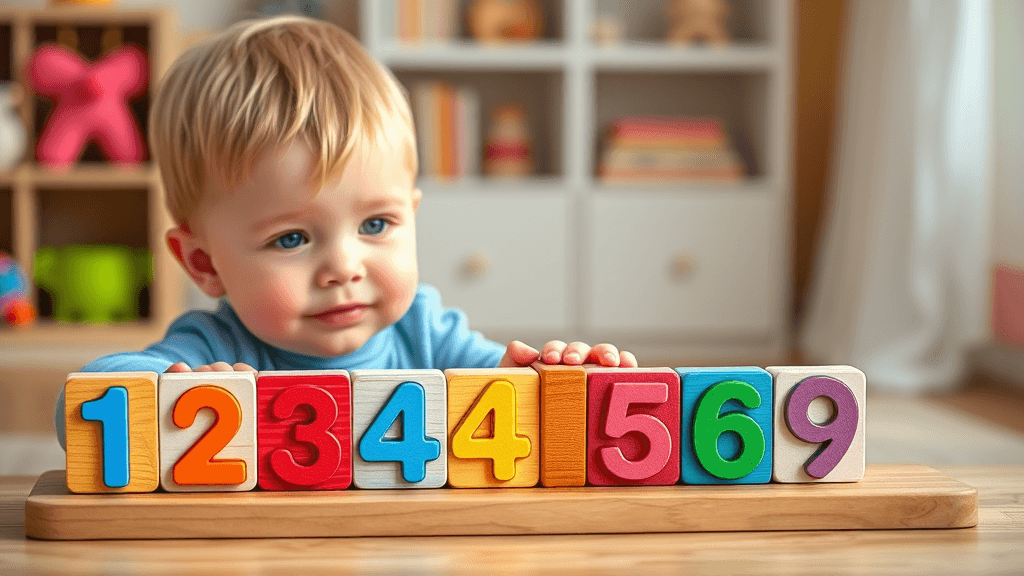
Numbers are everywhere in your child's world — house numbers, bus numbers, prices, ages, the number of chicken nuggets on their plate. Unlike phonics, which requires systematic instruction, early numeracy grows naturally from everyday experiences. Your job as a parent is to make those experiences explicit and intentional.
TL;DR: Teach your K1-K2 child numbers and counting with 10 fun activities. Covers number recognition, counting skills, and basic addition for Singapore parents.
This guide covers the key numeracy milestones for K1 and K2 children in Singapore, common misconceptions about early maths, and 10 hands-on activities that build genuine number sense — not just rote counting.
Numeracy in the Singapore Kindergarten Curriculum
The MOE NEL framework identifies Numeracy as one of six core learning areas for kindergarten children. The framework's numeracy goals focus on five key concepts:
- Number and counting — recognising numerals, counting objects, understanding quantity
- Patterns — identifying, extending, and creating simple patterns
- Shapes and space — recognising 2D and 3D shapes, understanding position and direction
- Measurement — comparing length, weight, capacity using non-standard units
- Data — simple sorting and classifying objects by attributes
This guide focuses on the first and most fundamental concept: numbers and counting. This is the foundation that everything else builds on.
Key Numeracy Milestones: K1 to K2
K1 (Age 5): The Foundation
By the end of K1, your child should be able to:
- Rote count to at least 20 (recite the number sequence)
- Recognise numerals 1 to 10 (read the written symbols)
- Count objects accurately up to 10 using one-to-one correspondence
- Understand "how many" — after counting a set, answer "How many are there?"
- Compare quantities — identify which group has more, fewer, or the same
- Write numerals 1 to 10 (with reasonable legibility, not perfection)
- Recognise basic patterns — ABAB, AABB
K2 (Age 6): Building Fluency
By the end of K2, your child should be able to:
- Count to at least 30 (many children reach 50 or 100)
- Recognise and write numerals 1 to 20
- Count backwards from 10 to 1
- Understand ordinal numbers — first, second, third, up to tenth
- Compose and decompose numbers — understand that 5 is 3 + 2 or 4 + 1
- Simple addition and subtraction within 10, using objects
- Recognise coins — identify 5-cent, 10-cent, 20-cent, 50-cent, $1 coins
These milestones align with what your child needs for the Primary 1 maths curriculum.
The Most Important Concept: One-to-One Correspondence
Many parents focus on how high their child can count ("She can count to 50!"). But the more important skill is whether your child truly understands what counting means.
One-to-one correspondence is the understanding that each object gets counted exactly once, and the last number said represents the total quantity.
A child who can recite "1, 2, 3, 4, 5" but touches three objects while saying five numbers does not yet have one-to-one correspondence. This is a developmental stage, not an error — and it is the single most important concept to build before moving on to addition and subtraction.
How to Build One-to-One Correspondence
- Touch and count: When counting objects, have your child physically touch (or move) each object as they say the number
- Slow down: Fast counting often leads to skipping objects or double-counting. Model slow, deliberate counting
- Line them up: Arrange objects in a line rather than a pile — this makes it easier to track which have been counted
- Ask "how many": After counting, ask "So how many are there altogether?" A child with one-to-one correspondence will immediately answer with the last number. A child without it may start counting again.
10 Activities to Teach Numbers at Home
1. Counting Everything
The simplest and most powerful activity: count things in your daily life. Out loud. Together.
- "Let us count the stairs as we walk up. 1, 2, 3..."
- "How many apples are in the fruit bowl?"
- "Can you put 4 forks on the table for dinner?"
- "How many red cars can you spot on the way to school?"
Real-world counting is more meaningful than worksheet counting because the numbers have a purpose — your child is counting something they care about.
2. Number Scavenger Hunt
Walk around your neighbourhood and find numbers in the environment:
- House numbers
- Bus numbers
- Prices in shop windows
- Numbers on car licence plates
- Floor numbers in the lift
Ask your child to read each number aloud. For older K2 children, challenge them to find numbers in a specific range ("Can you find a number bigger than 10?").
3. Counting Collections
Give your child a collection of small objects — buttons, bottle caps, pasta shapes, small toys — and ask them to count how many there are. Start with quantities under 10, then increase as their confidence grows.
For an extra challenge:
- "Can you sort them into groups and count each group?"
- "Can you make a group of exactly 7?"
- "Which group has more?"
4. Dice Games
Simple dice games naturally incorporate counting, number recognition, and basic addition:
- Roll and count: Roll a die, count out that many objects (blocks, snacks, stickers)
- Roll and move: Board games like Snakes and Ladders require counting spaces
- Two dice addition: Roll two dice and add the dots (for K2 children ready for addition)
Dice games are particularly effective because they combine counting with motivation (winning the game).
5. Cooking Together
Cooking involves numbers constantly:
- "We need 3 eggs. Can you count them out?"
- "Add 2 cups of flour."
- "Stir 10 times."
- "We have 12 cookies. If we eat 2, how many are left?"
Bonus: cooking also teaches measurement concepts (full/empty, more/less, heavy/light).
6. Number Formation Practice
Learning to write numerals requires the same fine motor skills as letter writing. Make it multi-sensory:
- Sand tray writing: Spread a thin layer of sand or salt on a tray. Your child writes numbers with their finger.
- Playdough numbers: Roll playdough "snakes" and shape them into numerals.
- Large-scale writing: Use chalk on the ground or finger-paint on a large sheet.
- App-based tracing: QuizKin's number tracing feature teaches correct formation with guided stroke sequences.
7. Number Line Activities
Create a physical number line on the floor (use tape and number cards) or on a long strip of paper.
Activities:
- "Stand on number 5. Now jump forward 2. What number are you on?"
- "Start on 8 and count back 3 steps."
- "Find the number that comes after 6."
Number lines make abstract addition and subtraction concrete and physical.
8. Sorting and Classifying
Give your child a mixed collection and ask them to sort by different attributes:
- Sort buttons by colour, then count each group
- Sort toy animals by size (big/small)
- Sort shapes (circles, squares, triangles) then count how many of each
Sorting teaches the foundations of data handling (graphs and charts in later maths) while reinforcing counting and comparison.
9. Pattern Making
Patterns are the bridge between counting and algebraic thinking. Start with simple AB patterns and progress:
- AB pattern: red, blue, red, blue, red, blue...
- ABB pattern: clap, stomp, stomp, clap, stomp, stomp...
- ABC pattern: circle, square, triangle, circle, square, triangle...
Use any materials: blocks, fruit, stickers, sounds, body movements.
Ask your child: "What comes next?" Then: "Can you make your own pattern?"
10. Digital Practice with QuizKin
QuizKin includes number recognition quizzes, counting activities, and number writing practice designed for K1-K2 levels. The adaptive algorithm adjusts difficulty based on your child's performance — if counting to 10 is easy, it moves to teen numbers. If number writing needs work, it provides more tracing practice.
Short digital sessions (10 minutes) complement hands-on activities well. Use app-based practice to reinforce what your child has learned through physical activities, not as a replacement for them.
Common Mistakes Parents Make with Early Numeracy
Mistake 1: Valuing Rote Counting Over Understanding
A child who can count to 100 but cannot accurately count 8 blocks does not have strong numeracy skills. Focus on understanding (one-to-one correspondence, cardinality) before pushing higher numbers.
Mistake 2: Starting With Written Maths Too Early
Written number sentences (3 + 2 = 5) are abstract. Before your child encounters these, they need extensive experience with concrete addition: "I have 3 cookies and you give me 2 more. Now I have 5."
The progression should be:
- Concrete (real objects)
- Representational (pictures or drawings of objects)
- Abstract (written numerals and symbols)
Mistake 3: Avoiding the Word "Maths"
Some parents unconsciously communicate their own maths anxiety to their children. Avoid saying "I was never good at maths" or "Maths is hard." Research shows that parental attitudes toward maths significantly influence children's own attitudes and performance.
Mistake 4: Only Practising Forward Counting
Counting backwards, counting by 2s, and counting from a number other than 1 are all important skills that are often neglected. Vary your counting practice:
- Count backwards from 10 (like a rocket launch)
- Start counting from 5 instead of always from 1
- Count by 2s: 2, 4, 6, 8, 10
- Count objects starting from the middle of a line
How Numeracy Connects to Other Learning Areas
Numeracy does not exist in isolation. In the NEL framework, it connects to:
- Language and Literacy: Number words, mathematical vocabulary (more, fewer, equal, bigger, smaller), following verbal instructions
- Motor Skills: Writing numerals requires the same fine motor development as letter writing
- Discovery of the World: Science concepts like measurement, time, and temperature all use numbers
- Social-Emotional Development: Turn-taking in games, sharing equally, understanding fairness
The most effective numeracy activities are not "maths worksheets" — they are integrated into play, conversation, and daily life.
Summary
Teaching numbers to your preschooler is less about drilling and more about creating a number-rich environment. Count things together every day. Play dice games. Cook together. Sort objects. Build patterns. Keep formal practice sessions short (5-10 minutes) and always use concrete objects before moving to abstract numbers. Your child does not need to count to 100 before Primary 1 — they need to understand what numbers mean, count accurately up to 20, and recognise that maths is a useful, enjoyable part of everyday life.
Sources
- Nurturing Early Learners (NEL) Framework — Numeracy — Ministry of Education, Singapore
- Early Childhood Mathematics Education Research — Sarama & Clements, Routledge, 2009
- MOE Primary 1 Mathematics Syllabus — Ministry of Education, Singapore
Looking for more? Check out find a tutor for free on TuitionLah.
Exploring parenthood in Singapore? Visit ParentLah for practical tips on raising kids in Singapore.
Practise what you've read with QuizKin
Adaptive quizzes covering phonics, sight words, numbers, and more — aligned with the Singapore MOE curriculum. Free for one child.
Frequently Asked Questions
By the end of K1, most Singapore kindergartens expect children to count orally to at least 20 and recognise written numerals 1 to 10. Some children may count higher — this is normal variation. More important than counting high is understanding one-to-one correspondence: being able to accurately count a set of objects (not just recite numbers from memory).
Yes. Oral counting (reciting the number sequence) and numeral recognition (reading the symbol '7') are two separate skills that develop independently. Many children learn to count orally first through songs and repetition, but need specific practice to recognise written numerals. Use number flashcards, point out numbers in your environment, and practise with apps like QuizKin to bridge this gap.
Simple addition and subtraction concepts can be introduced when your child can reliably count to 10 and understands one-to-one correspondence — typically around age 5 (K1). Start with concrete objects, not written equations. For example, 'You have 3 grapes. I am giving you 2 more. How many do you have now?' Written number sentences (3 + 2 = 5) typically come in K2 or early Primary 1.
Worksheets have a place but should not be the primary method. Preschoolers learn maths best through hands-on manipulation of objects, real-world counting experiences, and play-based activities. Use worksheets sparingly (5 minutes maximum) to practise numeral writing, and spend most of your maths time on concrete activities — counting real objects, sorting, patterns, and games.
No. The MOE Primary 1 maths curriculum starts with numbers up to 20 in the first term. Counting to 100 is taught in Primary 1 itself. A child who enters P1 able to count to 20, recognise numerals 1-20, and understand basic addition and subtraction within 10 is well-prepared. Counting to 100 before P1 is a bonus, not a requirement.
Ready to make learning fun?
QuizKin turns screen time into learning time with adaptive quizzes built for K1-K2 kids in Singapore. Free to start.
Related Articles
Preschool Maths Worksheets Singapore: What K1 and K2 Kids Actually Need to Learn (2026 Guide)
A parent's guide to preschool maths worksheets in Singapore. What MOE expects by Primary 1, which skills to focus on at K1 and K2, and how to make maths practice effective.
10 Kindergarten Math Games That Actually Work (Singapore Parents)
Fun, no-prep math games for K1-K2 kids at home. Build number sense, counting, addition, shapes, and patterns with activities aligned to the Singapore MOE NEL framework.

Fine Motor Skills & Handwriting Readiness for Preschoolers
Build handwriting readiness with 12 hands-on activities for preschoolers. Covers pencil grip stages, fine motor milestones, and writing tips for K1-K2.