June School Holiday Learning Activities for Preschoolers in Singapore (2026): Keep Them Learning Without the Screen
15 engaging June school holiday learning activities for preschoolers in Singapore. Budget-friendly ideas that keep K1 and K2 kids learning through play. Indoor and outdoor.
QuizKin Team
Published 30 April 2026
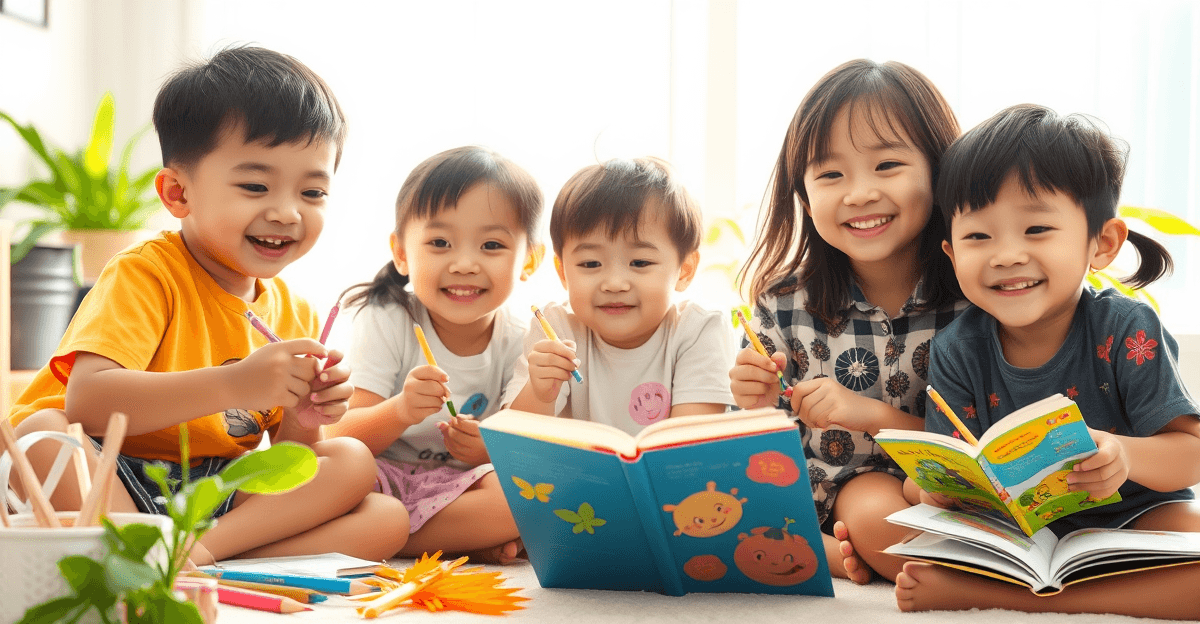
The June school holidays are four weeks long. Twenty-eight days. Six hundred and seventy-two hours. And if you are the parent of a preschooler, you have probably already done the mental maths on how many of those hours your child will spend asking "Can I watch iPad?"
TL;DR: 15 engaging June school holiday learning activities for preschoolers in Singapore. Budget-friendly ideas that keep K1 and K2 kids learning through play. Indoor and outdoor.
Here is the good news: keeping a K1 or K2 child engaged and learning during the holidays does not require expensive camps, elaborate craft setups, or a teaching degree. It requires a shift in thinking. The best holiday learning happens when children do not realise they are learning at all -- when counting happens during a baking project, when reading practice looks like a treasure hunt, and when science exploration involves getting muddy at a park.
This guide covers 15 holiday learning activities for preschoolers in Singapore, organised by skill area. Most are free or low-cost. All have been tested on actual children (ours included) and survived the ultimate filter: a four-year-old's attention span.
Before You Start: Setting Holiday Learning Expectations
Two ground rules that will save your sanity:
Rule 1: Do not replicate school. The holidays exist for a reason. Your child does not need a full day of structured activities. Aim for 1-2 intentional learning activities per day (30-60 minutes total), mixed with plenty of free play, outdoor time, and rest.
Rule 2: Follow the child's interest. If your child is obsessed with dinosaurs this week, lean into it. Dinosaur counting. Dinosaur letter matching. A trip to the Science Centre's dinosaur exhibit. Interest-driven learning is the most effective kind, especially for preschoolers.
Literacy Activities (Reading, Writing, and Language)
1. Library Adventure Day
Singapore's public libraries are air-conditioned, free, and stocked with thousands of children's books. During the June holidays, many branches run special storytelling sessions, craft workshops, and reading programmes.
The learning twist: Before each library visit, give your child a "book mission" -- find a book about animals, find a book with a red cover, find a book with your letter in the title. This turns browsing into purposeful searching and builds early literacy skills like identifying letters and categories.
Where: Any NLB branch. Jurong Regional Library and Woodlands Regional Library have dedicated children's sections with play areas.
2. Letter Treasure Hunt
Hide letter cards around your HDB flat or condo. Give your child clues ("this letter is hiding near something cold" for a letter stuck on the fridge). When they find each letter, they identify it and think of a word that starts with that letter.
Variation for K2: Hide sight words instead of individual letters. Or hide the letters of a secret word and have your child unscramble them.
Cost: Free. Use paper and a marker.
3. Storytelling Walk
Take a walk around your neighbourhood and make up a story together as you go. You start: "Once upon a time, a cat walked past this HDB block..." Your child continues with the next sentence. Take turns building the story.
This develops narrative skills, vocabulary, imagination, and turn-taking. It also makes a routine walk far more interesting for both of you.
4. QuizKin Daily Reading Practice
Use the QuizKin app for 15-20 minutes of focused phonics and reading practice each day. The app's bite-sized activities are designed for K1 and K2 learners and provide immediate feedback -- perfect for maintaining literacy skills over the holidays without worksheets.
Tip: Schedule app time at the same time each day (after breakfast works well) to maintain routine without rigidity.
Numeracy Activities (Counting, Patterns, and Early Maths)
5. Supermarket Maths
Turn your weekly grocery run into a numeracy lesson. Ask your child to:
- Count 6 apples into the bag
- Find the price of milk and identify the numbers
- Compare which packet is heavier
- Sort items by colour or type at the checkout
This is real-world numeracy -- the kind that builds genuine number sense rather than rote memorisation.
6. Cooking and Baking by Numbers
Baking is maths in disguise. Following a recipe involves counting (3 eggs), measuring (1 cup of flour), sequencing (step 1, then step 2), and fractions (half a cup). Let your child do as much of the measuring and counting as possible.
Simple holiday recipes to try:
- Banana pancakes (count bananas, measure flour, crack eggs)
- Fruit popsicles (count fruit pieces, measure juice)
- Rice crispy treats (measure cereal, count marshmallows)
7. Pattern Scavenger Hunt
Patterns are the foundation of mathematical thinking. Go on a walk and find patterns: tiles on the floor (ABABAB), leaves on a branch, railings on a fence. Take photos and make a "pattern book" at home.
Extension: Create your own patterns at home using LEGO bricks, buttons, or food (grape-strawberry-grape-strawberry).
8. Board Games and Card Games
Classic games are powerful numeracy tools:
- Snakes and Ladders: Counting, one-to-one correspondence, number recognition
- UNO: Number matching, colour matching, strategic thinking
- Dominos: Counting dots, matching, adding
- Memory/Concentration: Spatial memory, matching
Play these daily during the holidays. Your child will not realise they are practising maths.
Science and Discovery Activities
9. Gardens by the Bay Exploration
The outdoor gardens at Gardens by the Bay are free to enter. The Children's Garden (also free) has a water play area and nature play zone that are perfect for preschoolers.
The learning twist: Before visiting, pick a "nature challenge" -- find 5 different types of leaves, spot 3 different insects, identify which plants smell the strongest. Bring a small notebook for your child to draw their findings.
10. Science Centre Singapore
A full day at the Science Centre costs $6 for children (Singapore Citizens/PRs) and offers hours of hands-on learning. The KidsSTOP section is designed specifically for children aged 18 months to 8 years.
June holiday tip: Go on a weekday morning to avoid weekend crowds. Arrive when doors open at 10am for the best experience. You can often get discounted tickets for Singapore attractions on Klook, including the Science Centre, zoo, and aquarium.
11. Kitchen Science Experiments
Simple experiments using household items:
- Volcano: Baking soda + vinegar in a bottle (chemical reactions)
- Sink or float: Test household objects in a basin of water (density)
- Colour mixing: Mix primary colour food colouring to discover secondary colours
- Growing seeds: Plant mung beans in a wet cotton pad and observe daily growth
These activities develop scientific thinking: predicting, observing, comparing results.
Motor Skills and Creative Activities
12. Nature Art at the Park
Collect natural materials (leaves, twigs, flowers, seed pods) at a park and create art. Make leaf prints with paint, build a twig sculpture, or arrange natural materials into patterns and faces.
This combines fine motor skills (picking up small objects, arranging), creativity, and nature appreciation. East Coast Park, Bishan-Ang Mo Kio Park, and MacRitchie Reservoir are excellent spots.
13. Playdough Letters and Numbers
Make homemade playdough (flour, salt, water, food colouring) and use it to form letters and numbers. This is far more effective than pencil-and-paper writing practice for preschoolers because it builds the hand muscles needed for writing while being genuinely fun.
K2 extension: Form CVC words (cat, dog, sun) with playdough letters.
14. Obstacle Course Challenge
Set up a simple obstacle course at home or in the void deck: crawl under a chair, jump over a cushion, balance along a tape line on the floor, throw a ball into a basket. Time your child and let them try to beat their own record.
This develops gross motor skills, body awareness, spatial planning, and counting (timing). It also burns off energy -- a significant benefit during four weeks of holidays.
15. Community Centre Holiday Programmes
Many Community Centres (CCs) and Residents' Committees (RCs) organise free or low-cost holiday programmes for young children. Activities typically include craft workshops, sports activities, storytelling sessions, and outings.
Check your nearest CC for their June holiday programme schedule. Registration usually opens 2-3 weeks before the holidays begin.
Creating a Simple Holiday Routine
You do not need an hour-by-hour schedule, but a loose routine helps everyone:
Morning: Breakfast, 15-20 minutes of focused learning (QuizKin app, letter/number practice), followed by free play.
Late morning: Outing or hands-on activity (park, library, baking, science experiment).
Afternoon: Rest time or quiet play. Reading together.
Late afternoon: Outdoor play at the playground or void deck.
This gives structure without rigidity. Swap activities based on weather, energy levels, and your child's mood.
Making the Most of the Four Weeks
The June holidays are long enough to see genuine progress if you are consistent. A child who reads with you every day for four weeks will noticeably improve. A child who practises counting through real activities will start the next term with stronger number sense.
But the holidays are also meant to be enjoyed. The goal is not to turn every moment into a lesson. It is to weave learning naturally into a holiday that your child actually enjoys -- so that when K1 or K2 resumes, they return refreshed, confident, and ready.
For more learning ideas, read our guides on fun learning activities for preschoolers at home, teaching addition and subtraction, and after-school learning routines for K1 and K2.
Sources
Looking for more? Check out find a tutor for free on TuitionLah.
Exploring parenthood in Singapore? Visit ParentLah for practical tips on raising kids in Singapore.
Practise what you've read with QuizKin
Adaptive quizzes covering phonics, sight words, numbers, and more — aligned with the Singapore MOE curriculum. Free for one child.
Frequently Asked Questions
The June school holidays in Singapore for 2026 run from Saturday 30 May to Sunday 28 June -- a full four weeks. MOE kindergartens follow the same schedule as primary schools. Private preschools may have slightly different dates, so check with your centre directly.
The best approach is learning through play and everyday experiences. Visit museums and science centres, do cooking projects together, practise counting and letters through games, read daily, explore nature at parks and gardens, and use educational apps like QuizKin in short focused sessions. The goal is to maintain learning habits without replicating the school day.
Many free options exist. Public libraries run free holiday storytelling and craft sessions. Gardens by the Bay, Botanic Gardens, and nature reserves are free to enter. Community centres and residents' committees organise free holiday programmes. Museums like the National Museum offer free admission for Singapore Citizens and PRs. Parks like Bishan-Ang Mo Kio Park and East Coast Park have free playgrounds and cycling paths.
Holiday camps can be valuable for social interaction and structured activities, but they are not essential. Many parents find a mix of 1-2 weeks of camp plus home-based activities works well. When choosing a camp, look for a play-based, hands-on approach rather than academic worksheets. Check the instructor-to-child ratio and ask about the daily schedule. Budget $200-$600 per week depending on the type of camp.
The recommended limit remains 1 hour per day for children aged 2-5, even during holidays when routines relax. If you use screen time, make it purposeful: educational apps like QuizKin for 15-20 minute focused learning sessions, nature documentaries, or video calls with relatives. Avoid passive screen time (autoplay videos, scrolling) and keep screens out of bedrooms and mealtimes.
Ready to make learning fun?
QuizKin turns screen time into learning time with adaptive quizzes built for K1-K2 kids in Singapore. Free to start.
Related Articles

Sensory Play Activities for Preschoolers in Singapore: 20 Ideas That Build Real Skills (2026)
20 sensory play activities for preschoolers in Singapore. Develop fine motor skills, language, and focus through hands-on exploration. Indoor and outdoor ideas for K1 and K2 kids.
Best Phonics App for Kids in Singapore (2026): K1 & K2 Parent Guide
Comparing the top phonics apps for preschoolers in Singapore. We review features, pricing, and curriculum alignment to help you choose the best app for your K1 or K2 child.
15 Easy Kindergarten Science Experiments to Do at Home in Singapore (K1-K2, 2026)
Fun and educational science experiments for K1 and K2 children in Singapore. Simple materials, real learning outcomes. Build curiosity, observation skills, and early STEM foundations at home.