15 Easy Kindergarten Science Experiments to Do at Home in Singapore (K1-K2, 2026)
Fun and educational science experiments for K1 and K2 children in Singapore. Simple materials, real learning outcomes. Build curiosity, observation skills, and early STEM foundations at home.
QuizKin Team
Published 6 May 2026
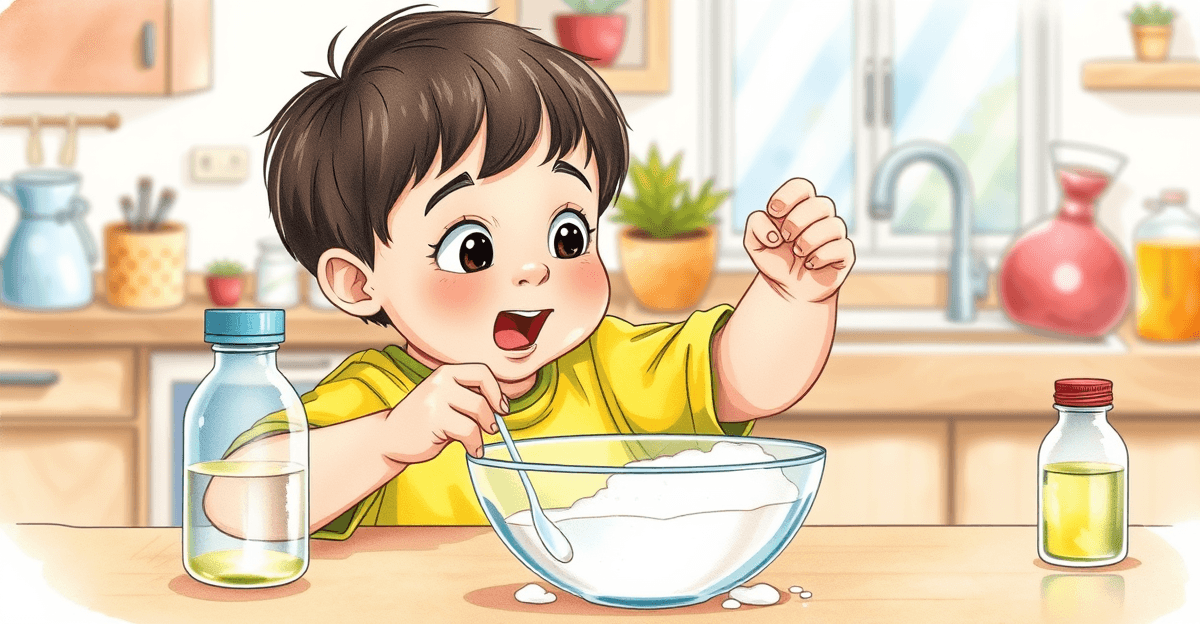
Your child asks "why?" approximately 437 times a day. Why is the sky blue? Why does ice melt? Why do magnets stick to the fridge but not to the table? These are not irritating interruptions to your afternoon -- they are the raw material of scientific thinking.
TL;DR: Fun and educational science experiments for K1 and K2 children in Singapore. Simple materials, real learning outcomes. Build curiosity, observation skills, and early STEM foundations at home.
The problem is that most parents answer these questions with words alone. "Because the sun makes it hot" or "because that is how magnets work." But preschoolers learn through doing, not listening. A four-year-old who watches ice melt in their hands while timing it with a sand timer understands heat transfer better than one who is told about it.
This guide gives you 15 hands-on science experiments designed specifically for K1 and K2 children in Singapore. Every experiment uses materials you already have at home (or can buy at Daiso for under $5), takes 10-20 minutes, and teaches a real scientific concept aligned with MOE's NEL framework "Discovery of the World" learning area. We have tested each one with 4-6 year olds and noted where to expect mess, frustration, or requests to "do it again" (spoiler: the volcano experiment will be repeated at least five times).
Why Science Experiments Matter for K1-K2 Children
Before the experiments, a brief note on why this matters -- especially for parents who wonder whether preschoolers are "too young for science."
The NEL Framework Connection
Singapore's MOE Nurturing Early Learners framework identifies "Discovery of the World" as one of six core learning areas for preschoolers. This domain emphasises exploration, observation, and inquiry -- not memorising facts. When your child mixes baking soda and vinegar, they are engaging with the NEL framework's goal of developing "a positive disposition towards finding out how things work."
Building the Right Brain Pathways
Between ages 3-6, a child's brain is forming connections at a rate it will never match again. Every hands-on experiment creates neural pathways connecting sensory input with language, logic, and memory. These pathways become the foundation for formal science learning later.
Skills That Transfer Everywhere
Science experiments for preschoolers are not really about chemistry or physics. They build:
- Observation -- noticing details, changes, and patterns
- Vocabulary -- learning to describe what they see (fizzing, dissolving, absorbing, floating)
- Prediction -- guessing what will happen and checking if they were right
- Patience -- waiting for results, repeating steps
- Sequencing -- following instructions in order (a critical Primary 1 readiness skill)
What You Need Before Starting
Most experiments below use common household items. Here is a master supply list that covers nearly all 15 experiments:
From your kitchen: Baking soda, white vinegar, cooking oil, dish soap, food colouring (red, blue, yellow), salt, sugar, ice cubes, water, zip-lock bags, clear glasses or jars, paper towels, a tray or baking sheet (for containing mess)
From Daiso or a dollar store: Magnifying glass, small magnets, balloons, pipettes or droppers (optional but kids love them), clear plastic cups
From NTUC/Cold Storage: Mung beans or red beans (for growing), celery stalks with leaves (for the colour-changing experiment)
Total cost if buying everything: Under $15. Most families already have 80% of the materials at home.
Experiment 1: Baking Soda Volcano
Concept: Chemical reactions (acid + base produces gas)
Mess level: Medium-high (do this on a tray or in the sink)
Time: 5 minutes setup, 2 minutes per eruption (will be repeated many times)
What to Do
- Place a small cup or empty yoghurt container on a tray
- Add 2 tablespoons of baking soda to the cup
- Add a few drops of food colouring (red or orange for "lava" effect)
- Add a squirt of dish soap (makes the eruption foamier)
- Let your child pour vinegar into the cup
- Watch it foam and overflow
What to Talk About
Ask your child what they see (foam, bubbles, overflow). Explain in simple terms: "The baking soda and vinegar do not like being together, so they make gas bubbles that push the foam up and over." Use the words "react" and "gas" -- preschoolers can handle these if you use them naturally.
Extension
Try different amounts of vinegar and baking soda. Which combination makes the biggest eruption? This introduces the concept of variables.
Experiment 2: Sink or Float Investigation
Concept: Density and buoyancy
Mess level: Low (just water in a basin)
Time: 15-20 minutes
What to Do
- Fill a large basin or container with water
- Gather 10-15 household objects: apple, grape, coin, cork, sponge, toy car, wooden block, rubber duck, stone, leaf, paperclip, crayon, plastic bottle cap, orange (with and without peel)
- Before testing each object, ask your child: "Do you think this will sink or float?"
- Let them place each object in the water
- Sort objects into two groups: sinkers and floaters
What to Talk About
Ask: "What do the floaters have in common? What about the sinkers?" Guide them toward the idea that heavy-for-their-size things sink and light-for-their-size things float. The orange experiment is particularly interesting -- an unpeeled orange floats (the peel has air pockets) while a peeled orange sinks.
Extension
Can they make a sinker float? (Hint: put a coin on a flat piece of foil shaped like a boat.) This introduces engineering thinking.
Experiment 3: Rainbow Walking Water
Concept: Capillary action and colour mixing
Mess level: Low (contained in cups)
Time: 5 minutes setup, 1-2 hours to see results (check periodically)
What to Do
- Line up 7 clear cups in a row
- Fill cups 1, 3, 5, and 7 with water
- Add red food colouring to cups 1 and 7, yellow to cup 3, blue to cup 5
- Fold paper towels into strips and drape them between cups (one end in each adjacent cup)
- Wait and watch -- water "walks" up the paper towels and fills the empty cups, mixing colours
What to Talk About
Your child will be fascinated watching the water climb "uphill" through the paper. Explain: "The paper towel has tiny holes that pull the water up, like a straw." Point out the colour mixing: "Red water and yellow water are meeting in this cup -- what colour are they making?" This connects beautifully to learning about primary and secondary colours.
Extension
Try different paper types (newspaper, tissue paper, printer paper). Which one lets water walk fastest?
Experiment 4: Magnet Exploration
Concept: Magnetism (attract vs. not attract)
Mess level: None
Time: 15-20 minutes
What to Do
- Gather several magnets (fridge magnets work fine)
- Collect 15-20 household objects: paperclip, coin, wooden spoon, plastic ruler, aluminium foil, steel spoon, rubber band, battery, key, pencil, tin can, glass marble, button, zipper
- Have your child predict which objects the magnet will attract
- Test each one
- Sort into two groups: magnetic and non-magnetic
What to Talk About
Guide your child to notice that most magnetic things are metal -- but not all metals are magnetic (aluminium foil is metal but not magnetic, coins are mixed). Use the word "attract" rather than "stick to." Ask: "Can you find anything magnetic that is not silver-coloured?"
Extension
Can the magnet work through paper? Through water? Through your hand? Through a wooden table? This explores the concept that magnetic force passes through some materials.
Experiment 5: Ice Melting Race
Concept: Heat transfer, states of matter
Mess level: Low (water from melting ice)
Time: 20-30 minutes
What to Do
- Put identical ice cubes on different surfaces: a metal plate, a wooden board, a plastic plate, a piece of cloth, and wrapped in aluminium foil
- Have your child predict which will melt first
- Check every 5 minutes and observe the differences
- Optional: try putting salt on one ice cube and nothing on another to compare
What to Talk About
The ice on metal melts fastest because metal conducts heat well -- it carries warmth from the room air into the ice quickly. The one on cloth melts slowest because cloth insulates (keeps cold things cold). Ask: "Why do we put ice cream in a cooler bag?" Connect it to real life.
Extension
Can they keep an ice cube from melting for as long as possible? Give them materials (cloth, paper, foil, plastic wrap) and let them engineer an insulation solution. This is a design challenge that builds problem-solving skills.
Experiment 6: Growing Beans in a Bag
Concept: Plant growth, life cycles
Mess level: None
Time: 5 minutes setup, 5-7 days observation
What to Do
- Wet a paper towel and place it inside a zip-lock bag
- Place 2-3 mung beans or red beans on the paper towel
- Seal the bag and tape it to a window (so sunlight reaches it)
- Observe daily -- the beans will sprout within 2-3 days in Singapore's warm climate
- Have your child draw what they see each day
What to Talk About
Point out the parts as they appear: "Look, the root is growing down. Now a green shoot is growing up." Ask: "What does the plant need to grow?" (Water, light, warmth.) This connects to the concept of living versus non-living things.
Extension
Grow two bags -- one on a sunny window and one in a dark cupboard. Compare after 5 days. The dark one will grow but be pale and leggy, demonstrating the importance of light for healthy plant growth.
Experiment 7: Oil and Water Lava Lamp
Concept: Density, immiscibility (liquids that do not mix)
Mess level: Low (contained in a bottle)
Time: 10 minutes
What to Do
- Fill a clear bottle or tall glass 3/4 with vegetable oil
- Add water (coloured with food colouring) until the bottle is nearly full
- Watch the coloured water sink below the oil
- Break an Alka-Seltzer tablet (or add pinches of salt) into the bottle
- Watch coloured blobs rise and fall like a lava lamp
What to Talk About
"Oil and water do not mix -- see how the water sinks to the bottom? That is because water is heavier than oil." The Alka-Seltzer creates gas bubbles that carry water blobs up, then the bubbles pop and the water sinks again. Kids will ask to add more tablets (buy a full pack -- you will use them all).
Extension
Try adding different liquids: honey, dish soap, milk. Can your child predict where each one will settle based on how heavy it is? This introduces the concept of density layers.
Experiment 8: Colour Changing Celery
Concept: How plants transport water (capillary action in plants)
Mess level: None (just water in cups)
Time: 5 minutes setup, 24 hours observation
What to Do
- Fill 3-4 glasses with water and add different food colouring to each (use strong colours)
- Cut the bottom of celery stalks at an angle and place one in each glass
- Wait 24 hours
- Check the celery leaves -- they will have changed colour
What to Talk About
"The celery drank the coloured water through tiny tubes inside the stalk -- like drinking through a straw. The colour went all the way up to the leaves." Cut the stalk crosswise and show the coloured dots (the vascular bundles). This is how all plants drink water from the ground.
Extension
Try a white flower (carnation or daisy from NTUC) -- it will change colour more dramatically. Or split a celery stalk and put each half in a different colour to get a two-toned result.
Experiment 9: Static Electricity Butterfly
Concept: Static electricity
Mess level: None
Time: 10 minutes
What to Do
- Cut a small butterfly shape from tissue paper
- Blow up a balloon
- Rub the balloon vigorously on your child's hair (or a wool cloth)
- Hold the balloon near the tissue paper butterfly
- Watch the butterfly "fly" up and stick to the balloon
What to Talk About
"Rubbing the balloon creates something called static electricity -- invisible force that pulls light things toward it." Let them try other light objects: small pieces of paper, puffed rice, tinsel. Ask: "Does it work without rubbing? What happens if you rub it more?"
Extension
Turn on a water tap to a thin stream. Hold the rubbed balloon near the stream -- the water will bend toward the balloon. This never fails to impress.
Experiment 10: Rain in a Jar
Concept: Water cycle (evaporation, condensation, precipitation)
Mess level: Low
Time: 10 minutes
What to Do
- Fill a glass jar 2/3 with warm water (not boiling -- warm tap water is fine)
- Spray shaving cream on top (this represents clouds)
- Let your child use a pipette or spoon to drip food colouring onto the shaving cream "clouds"
- Wait and watch -- the colour will eventually seep through and "rain" into the water below
What to Talk About
"Real clouds are like this -- they hold water until they get too full, then the water falls as rain." Point to the sky next time it is overcast and remind them of the experiment. This builds a concrete mental model of an abstract process.
Extension
On a sunny Singapore afternoon, put a bowl of water outside and mark the water level. Check the next day -- the level dropped because water evaporated into the air. "Where did the water go? Into the air, just like from puddles after rain."
Experiment 11: Oobleck (Non-Newtonian Fluid)
Concept: States of matter (solid vs. liquid properties)
Mess level: HIGH (do this outside or in the bathtub)
Time: 15-20 minutes
What to Do
- Mix 2 cups of cornstarch with 1 cup of water in a large bowl
- Add food colouring if desired
- Let your child poke, squeeze, punch, and roll the mixture
- It acts solid when you hit it hard but flows like a liquid when you move slowly
What to Talk About
"This is not a solid and not a liquid -- it is both. When you push it fast, it pushes back and feels hard. When you move slowly, it flows. Scientists call this a non-Newtonian fluid." This genuinely puzzles children (and adults) and provokes great questions about "is it solid or liquid?"
Extension
Put a layer on a tray and try to "run" a toy car across it quickly versus slowly. Or try to pick up a handful and watch it "melt" between their fingers. This experiment builds rich descriptive vocabulary -- squishy, hard, melting, flowing, dripping.
Experiment 12: Shadow Exploration
Concept: Light travels in straight lines, opacity
Mess level: None
Time: 15-20 minutes
What to Do
- In a darkened room (close curtains), set up a torch/phone flashlight
- Shine it at a white wall
- Place various objects between the light and wall: transparent (plastic bottle), translucent (wax paper), opaque (toy, hand, cardboard cutouts)
- Observe the different shadows
What to Talk About
"Light cannot go through solid things, so it makes a shadow on the other side. Can you make a big shadow? A small one? Move the toy closer and further from the light -- what happens?" Introduce the words transparent (light goes through), translucent (some light goes through), and opaque (no light goes through).
Extension
Go outside in the morning and afternoon -- trace your child's shadow with chalk both times. Why is it different lengths? This introduces the concept of the sun's position changing throughout the day.
Experiment 13: Balloon Rocket
Concept: Newton's Third Law (action and reaction)
Mess level: None
Time: 10 minutes
What to Do
- Thread a string across the room (tie between two chairs)
- Thread a straw onto the string
- Blow up a balloon and pinch the end (do not tie it)
- Tape the inflated balloon to the straw
- Let go -- the balloon zooms along the string
What to Talk About
"The air rushing out of the balloon pushes backward -- and that push makes the balloon go forward. This is how real rockets work. The rocket pushes gas out the bottom, and that pushes the rocket up." Let them experiment with different amounts of air and balloon sizes.
Extension
Challenge them to make the balloon travel further. Does a bigger balloon go further? Does the string angle matter? This introduces systematic testing -- changing one thing at a time.
Experiment 14: Dissolving Experiment
Concept: Solubility (what dissolves in water)
Mess level: Low
Time: 15 minutes
What to Do
- Set up 6 clear cups of water (same amount in each)
- Choose 6 substances: salt, sugar, sand, oil, rice, coffee powder
- Have your child predict which will dissolve
- Add one substance to each cup and stir
- Observe: some dissolve (disappear), some do not
What to Talk About
"Dissolve means the substance breaks into such tiny pieces that we cannot see them anymore -- it mixes completely into the water." Salt and sugar dissolve. Sand and rice do not. Oil floats on top. Ask: "If we cannot see the sugar, is it still there?" (Taste it -- yes it is.)
Extension
Does warm water dissolve things faster than cold water? Test with sugar in hot versus cold water. This introduces the concept that temperature affects reactions -- a foundation for future chemistry understanding.
Experiment 15: Sound Vibration Drum
Concept: Sound is vibration
Mess level: None
Time: 10 minutes
What to Do
- Stretch cling wrap tightly over the top of a bowl (secure with a rubber band)
- Place a few grains of rice or salt on the cling wrap surface
- Hold a metal pot near the cling wrap and bang it with a spoon (do not touch the cling wrap)
- Watch the rice grains jump
What to Talk About
"Sound is not invisible -- it is tiny vibrations moving through the air. The vibrations from the pot hit the cling wrap and make it shake, which makes the rice jump. Your ears work the same way -- sound vibrations hit a tiny drum inside your ear." Let them try different sounds: clapping, shouting, humming. Which makes the rice jump most?
Extension
Wrap rubber bands of different thicknesses around a tissue box. Pluck them -- thick ones make low sounds, thin ones make high sounds. This introduces pitch and how instruments work.
How to Make Experiments a Regular Habit
The Once-a-Week Approach
You do not need to do all 15 experiments in one weekend. Choose one per week as a dedicated "science time" activity. This gives your child something to look forward to and prevents experiment fatigue.
Connect Experiments to Daily Life
The real learning happens after the experiment, when your child notices connections in everyday life. "Look, the puddle is gone -- it evaporated, like our experiment." "The metal railing is hot -- metal conducts heat fast, remember?" Reinforce these connections whenever they arise naturally.
Document and Revisit
Take photos or have your child draw their observations. This builds a "science journal" that you can revisit. It also practices the writing and drawing skills they will need for Primary 1.
Let Them Fail and Repeat
If an experiment does not work as expected, that is not a failure -- it is data. Ask: "Hmm, that did not happen the way we predicted. Why do you think? What could we try differently?" This builds resilience and problem-solving mindset.
Pair with Digital Learning
After hands-on experiments, reinforce concepts through age-appropriate digital learning. QuizKin's science and nature quiz categories include questions about plants, animals, weather, and materials that connect directly to these experiments. The combination of physical exploration and digital reinforcement creates stronger memory encoding.
Safety Notes for Singapore Parents
- Always supervise experiments closely, especially those involving water, small objects, or chemicals (vinegar is safe but can sting eyes)
- Food colouring stains -- use old clothes or a smock, and protect surfaces with a tray or old newspaper
- Baking soda and vinegar are non-toxic but should not be intentionally consumed in experiment quantities
- Never leave young children unsupervised near water -- even shallow amounts
- For the ice experiment, ensure ice cubes are not so small they present a choking hazard for younger siblings
- Magnets: keep strong magnets away from electronics, credit cards, and children under 3 who might swallow them
- Oobleck (cornstarch mixture) should not go down the drain -- it can clog pipes. Dispose in the bin
Connecting Science to Singapore's Curriculum
These experiments are not random fun -- they align directly with what your child will encounter in formal education:
Primary 1-2: Students learn about living/non-living things, materials and their properties, and basic life cycles -- all introduced through these experiments.
Primary 3-6 Science: Formal study of heat, light, forces, plant systems, and the water cycle. Children with hands-on preschool experience approach these topics with existing mental models and vocabulary.
MOE's emphasis on inquiry-based learning: Since 2014, Singapore's primary science curriculum has emphasised process skills (observing, comparing, classifying, measuring) over rote memorisation. Home experiments build exactly these skills.
For more on preparing your child for Singapore's primary school expectations, see our Primary 1 readiness guide and skills checklist.
What Parents Often Get Wrong
Mistake 1: Over-explaining. Let your child observe and describe before you explain anything. If they say "it went fizzy," that is valid science language for a four-year-old. Do not rush to explain the chemistry -- let them sit with the wonder.
Mistake 2: Expecting neatness. Science is messy. Embrace it. Put down a tray or do experiments in the bathroom/kitchen. A child who is worried about making a mess will not experiment freely.
Mistake 3: Doing it for them. Even if your child is doing it "wrong" -- let them. The experiment might not work as written, and that is fine. They learn more from figuring out why it failed than from watching you do it perfectly.
Mistake 4: Treating it as a lesson. This is play. If your child wants to abandon the planned experiment and just pour water between cups for 20 minutes, let them. Free exploration builds the same skills as structured experiments.
Mistake 5: Only doing it once. Repetition is not boring for preschoolers -- it is how they learn. If your child wants to do the volcano experiment seven times, let them. Each repetition builds confidence and deepens understanding.
Sources
Looking for more? Check out find a tutor for free on TuitionLah.
Exploring parenthood in Singapore? Visit ParentLah for practical tips on raising kids in Singapore.
Practise what you've read with QuizKin
Adaptive quizzes covering phonics, sight words, numbers, and more — aligned with the Singapore MOE curriculum. Free for one child.
Frequently Asked Questions
Children aged 4-5 can do many simple experiments including volcano eruptions (baking soda and vinegar), colour mixing with water and food colouring, sink-or-float investigations, growing beans in a zip-lock bag, making rain in a jar (shaving cream clouds), magnet exploration, ice melting races, and simple shadow experiments. The key is choosing experiments with clear visual results, safe materials, and short wait times. At this age, the goal is building curiosity and observation skills rather than understanding complex scientific concepts.
Yes. MOE's Nurturing Early Learners (NEL) framework includes 'Discovery of the World' as a core learning area for preschoolers. Early science exploration builds observation skills, critical thinking, vocabulary, and problem-solving abilities that support all later academic learning. Singapore's emphasis on STEM education starts at primary school, and children who have hands-on science experience in preschool transition more easily into formal science lessons. Beyond academics, science experiments build patience, persistence, and the confidence to ask questions.
Most preschool science experiments use everyday household items: baking soda, vinegar, food colouring, water, cooking oil, dish soap, ice, salt, magnets (fridge magnets work), balloons, paper towels, zip-lock bags, clear cups or jars, and small toys for testing. You do not need to buy science kits. Items from Daiso, NTUC FairPrice, and your kitchen pantry cover virtually every experiment in this guide. A magnifying glass (available at Daiso for $2) is the only 'special' equipment recommended.
Aim for 10-20 minutes of active experiment time for K1 children (age 4-5) and 15-30 minutes for K2 children (age 5-6). Most experiments in this guide take 5-10 minutes for the actual activity, plus discussion time. The attention span of preschoolers is limited, so short, dramatic experiments with clear results work better than slow, subtle ones. If your child is deeply engaged, let them repeat the experiment or try variations -- repetition is how young children learn.
Science experiments build multiple skills needed for Primary 1: observation and description (key for English composition), counting and measuring (maths foundations), following sequential instructions (important for all subjects), patience and focus (classroom readiness), and vocabulary development. They also introduce the scientific method -- making predictions, testing them, and observing results -- which is the foundation of formal science education from Primary 3 onwards. Children who have experimented hands-on are more confident asking and answering questions in class.
Ready to make learning fun?
QuizKin turns screen time into learning time with adaptive quizzes built for K1-K2 kids in Singapore. Free to start.
Related Articles
Sensory Play Activities for Preschoolers in Singapore: 20 Ideas That Build Real Skills (2026)
20 sensory play activities for preschoolers in Singapore. Develop fine motor skills, language, and focus through hands-on exploration. Indoor and outdoor ideas for K1 and K2 kids.

Teach Your Child to Read at Home (Singapore Guide)
Help your K1-K2 child read independently at home. From phonics and sight words to building fluency, aligned with the Singapore MOE kindergarten curriculum.
Best Learning Tablets for Kids in Singapore (2026): iPad vs Android Guide for Parents
Comparing the best tablets for kids' learning in Singapore. iPad, Samsung, Amazon Fire, and budget options. Age-appropriate recommendations, parental controls, and educational app compatibility.