Signs of Learning Difficulties in Preschoolers (Singapore)
How to spot early signs of dyslexia, ADHD, and other learning differences in K1-K2 children. Where to get assessments and support in Singapore.
QuizKin Team
Published 24 April 2026
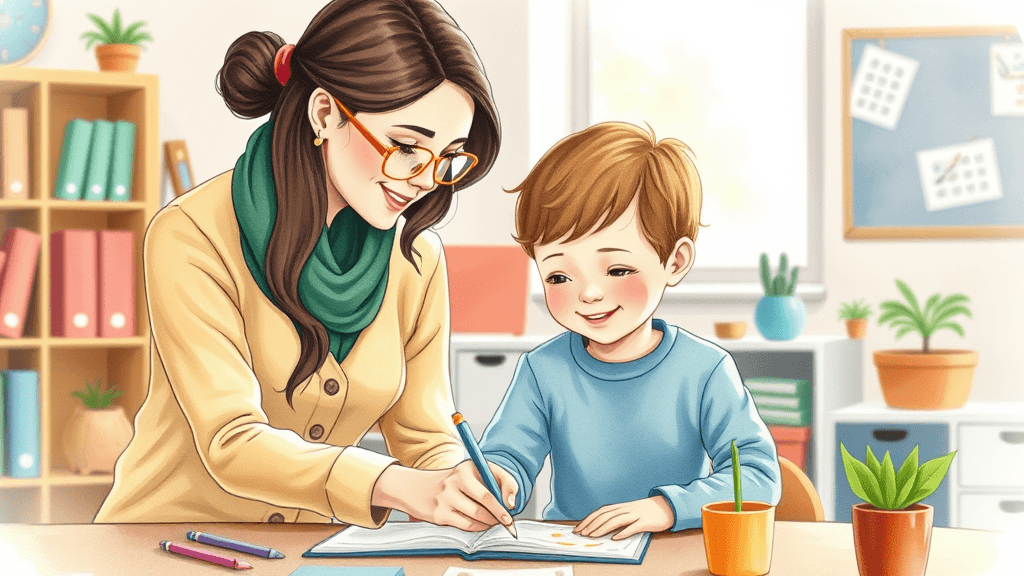
No parent wants to hear that their child might have a learning difficulty. The phrase itself can trigger fear, guilt, and a cascade of questions: Did I do something wrong? Will my child be able to cope in school? What does this mean for their future?
TL;DR: How to spot early signs of dyslexia, ADHD, and other learning differences in K1-K2 children. Where to get assessments and support in Singapore.
Here is what you need to know upfront: learning difficulties are common (affecting 5 to 15 percent of children), they are not caused by parenting or lack of effort, and early identification and intervention make a significant difference in outcomes. A child identified and supported in kindergarten has a much better trajectory than one whose difficulties are not recognised until Primary 3 or 4.
This guide covers the most common learning differences that can be identified in the preschool years, what to look for at different ages, where to get help in Singapore, and how to support your child's learning regardless of diagnosis.
What Are Learning Difficulties?
Learning difficulties — sometimes called learning differences, learning disabilities, or special educational needs (SEN) — are neurological conditions that affect how the brain processes information. They are not related to intelligence. Many children with learning difficulties are bright, creative, and capable — they simply process certain types of information differently.
The most common learning difficulties that become apparent in the preschool years include:
- Dyslexia — difficulty with reading, spelling, and phonological processing
- Dysgraphia — difficulty with handwriting and written expression
- Dyscalculia — difficulty with number sense, counting, and mathematical reasoning
- ADHD (Attention Deficit Hyperactivity Disorder) — difficulty with sustained attention, impulse control, and/or hyperactivity
- Developmental Language Disorder (DLD) — difficulty with understanding and/or using spoken language
- Autism Spectrum Disorder (ASD) — differences in social communication, interaction, and behaviour patterns
Each of these has distinct characteristics, though they can overlap. A child can have more than one learning difference simultaneously.
Early Signs by Age
Signs at Age 3-4 (Nursery)
At this age, most differences are in the "watch and wait" category. However, some early indicators are worth noting:
Possible indicators of literacy-related difficulties:
- Limited interest in books, stories, or rhymes compared to peers
- Difficulty learning nursery rhymes or remembering the words to songs
- Trouble recognising their own name in print
- No interest in letters or the sounds they make
- Speech and language delays — late talking, limited vocabulary, unclear speech
Possible indicators of attention/behaviour-related differences:
- Significantly more active or restless than same-age peers in structured settings
- Very short attention span for age-appropriate activities (even those they enjoy)
- Difficulty following simple two-step instructions
- Frequent emotional meltdowns that seem out of proportion to the trigger
- Difficulty with transitions between activities
Possible indicators of motor-related difficulties:
- Avoidance of drawing, colouring, or any activity requiring pencil use
- Difficulty with tasks other children manage — buttoning, zipping, using scissors
- Unusual pencil grip that does not improve with guidance
- Avoidance of puzzles, blocks, or construction activities
Important context: Many of these behaviours are normal at age 3-4. They only become concerning when they are significantly more pronounced than in peers, persistent over several months, and not improving with typical developmental progress and support.
Signs at Age 4-5 (K1)
K1 is when learning differences often become more apparent because children are expected to begin structured learning activities.
Possible indicators of dyslexia:
- Difficulty learning letter sounds despite repeated instruction (not just letter names — specifically the sounds)
- Trouble with phonological awareness tasks: rhyming ("What rhymes with cat?"), alliteration ("What sound does 'snake' start with?"), syllable counting (clapping the beats in "el-e-phant")
- Slow to learn to write their name
- Difficulty remembering new words — learns a word one day, forgets it the next
- Family history of reading difficulties (dyslexia has a strong genetic component)
Possible indicators of ADHD:
- Cannot sit still for age-appropriate activities (5-10 minutes at this age)
- Constantly touching things, moving, climbing
- Difficulty waiting for their turn, even with reminders
- Frequently interrupts others
- Loses things regularly
- Seems not to listen when spoken to directly
- Behaviour is consistent across settings (not just at home or just at school)
Possible indicators of dyscalculia:
- Difficulty understanding one-to-one correspondence (matching one object to one number)
- Trouble remembering the number sequence — forgets what comes after 7, even though they have been told many times
- Difficulty with basic counting activities that peers manage easily
- Confusion with spatial concepts: in/out, above/below, first/last
- Avoidance of number-related activities
Possible indicators of autism spectrum differences:
- Limited eye contact or social engagement compared to peers
- Unusual or absent pretend play
- Intense, focused interests in specific topics
- Difficulty with changes in routine — strong reactions to unexpected changes
- Repetitive behaviours or movements
- Unusual sensory responses (covering ears at certain sounds, discomfort with certain textures)
Signs at Age 5-6 (K2)
By K2, learning differences become more evident because the academic demands increase and the gap between children with and without difficulties often widens.
Stronger indicators of dyslexia:
- Still cannot reliably match letters to their sounds after a year of phonics instruction
- Cannot blend three sounds into a word (c-a-t = ?) despite repeated practice
- Reading progress is significantly behind peers who have had similar instruction
- Reversal of letters (b/d, p/q) combined with other difficulties (reversals alone are normal at this age)
- Difficulty learning sight words — the same words need to be re-taught repeatedly
Stronger indicators of ADHD:
- Teachers report difficulty managing the child's behaviour in class
- Academic performance is inconsistent — "can do it one day, cannot the next"
- Difficulty completing tasks — starts activities but rarely finishes them
- Organisational challenges — loses belongings, forgets instructions
- Impulsive behaviour that leads to social conflicts with peers
Stronger indicators of developmental language disorder:
- Significant gap between what the child understands and what they can express
- Difficulty finding words — uses "thing" or "that" frequently
- Grammar errors that peers have outgrown ("me go park," "her is playing")
- Difficulty following classroom instructions, even when paying attention
- Limited participation in class discussions
What to Do If You Suspect a Learning Difficulty
Step 1: Talk to Your Child's Teacher
Your child's kindergarten teacher sees them in a learning context every day and can provide valuable observations. Ask specifically:
- How does my child compare to same-age peers in terms of literacy/numeracy/attention/social skills?
- Have you noticed any patterns of difficulty that concern you?
- Does my child need more support than typical to complete tasks?
Teachers in Singapore kindergartens are trained to identify children who may need additional support and can initiate referral through the Development Support Programme (DSP).
Step 2: Understand Your Options in Singapore
Development Support Programme (DSP). This MOE-funded programme provides in-class support for preschoolers who need additional help with learning or development. It is available in many kindergartens and childcare centres. The programme is free for Singapore citizens and provides targeted small-group intervention within the school setting.
KK Women's and Children's Hospital (KKH). The Child Development Unit at KKH is Singapore's largest public paediatric developmental assessment centre. Referral is through a polyclinic or your child's paediatrician. Wait times for an initial appointment are typically 2 to 4 months. The centre provides comprehensive assessment by a multidisciplinary team.
National University Hospital (NUH). Similar developmental assessment services as KKH, with a strong research orientation. Also accessible through polyclinic or paediatrician referral.
Dyslexia Association of Singapore (DAS). Offers dyslexia screening for children from age 5 and provides specialised remediation programmes. DAS assessments are more affordable than private psychoeducational assessments and are specifically focused on literacy-related difficulties.
Private Developmental Paediatricians and Psychologists. Offer shorter wait times (usually 1 to 4 weeks) but at higher cost. A comprehensive psychoeducational assessment typically costs $1,500 to $3,000 and includes a detailed report. This route is worth considering if your child needs assessment urgently or if public hospital wait times are long.
Step 3: Do Not Wait to Act
The most important message in this guide: do not adopt a "wait and see" approach if you have genuine concerns. The research is unambiguous — early intervention produces significantly better outcomes than late intervention. A child who receives support at age 5 for phonological processing difficulties will have a much easier time learning to read than one who does not receive support until age 8.
Seeking an assessment does not mean something is "wrong" with your child. It means you are being proactive about understanding their learning profile so you can provide the right support. If the assessment finds no concerns, you will have peace of mind. If it identifies a need, you will have early access to help.
Supporting Your Child at Home — Regardless of Diagnosis
Whether or not your child has a formal diagnosis, these strategies support all learners, especially those who find certain types of learning challenging.
For Literacy Challenges
- Read aloud daily — even children who struggle with reading benefit enormously from hearing books read aloud
- Focus on phonological awareness activities: rhyming games, clapping syllables, identifying first sounds in words
- Use multi-sensory approaches: trace letters in sand, form letters with playdough, write letters in shaving cream
- Keep practice sessions short (5 to 10 minutes) and positive — end before frustration sets in
- QuizKin's adaptive learning adjusts difficulty automatically, ensuring your child practises at the right level without becoming overwhelmed
For Numeracy Challenges
- Use concrete objects for all counting and number activities — buttons, blocks, toy animals
- Connect numbers to real life: "You have 3 grapes. Can you give me 1? How many do you have now?"
- Avoid timed activities or drills, which increase anxiety and reduce learning
- Celebrate effort and progress, not just correct answers
For Attention and Behaviour Challenges
- Create a structured, predictable daily routine with visual schedules
- Break tasks into small, manageable steps
- Give one instruction at a time, not multiple steps at once
- Provide frequent movement breaks between seated activities
- Use positive reinforcement — catch your child being focused and praise it specifically: "I noticed you sat and listened to the whole story. That was excellent concentration."
For Social Communication Challenges
- Practise social scenarios through role-play and social stories
- Arrange one-on-one playdates (easier than group settings) with children who share your child's interests
- Teach specific social scripts: "Hi, can I play?" "Can I have a turn?"
- Prepare your child for transitions and changes in routine with advance notice
Beyond Kindergarten: What Happens in Primary School
If your child enters Primary 1 with identified learning difficulties, several support programmes are available in mainstream Singapore schools:
Learning Support Programme (LSP). Available in all primary schools for children who need additional help with English language and literacy. Identified through a screening test at P1 entry. Provides small-group lessons by trained Learning Support Coordinators.
School-Based Dyslexia Remediation (SDR). Available in selected primary schools from P3 onwards. Provides specialised dyslexia remediation by trained instructors during school hours.
Allied Educators (Learning and Behavioural Support). Many primary schools have Allied Educators who support children with learning or behavioural needs. They work with classroom teachers to provide accommodations and targeted support.
Access arrangements for exams. Children with documented learning difficulties may be eligible for examination accommodations at PSLE and other national exams, such as extra time, separate rooms, or modified papers. Documentation from a qualified psychologist is required.
Having a documented assessment — even from the preschool years — helps your child access these support programmes more quickly when they enter primary school.
Key Takeaways
- Learning difficulties are common (5 to 15 percent of children), not caused by parenting, and not related to intelligence.
- Early identification and intervention produce significantly better outcomes. Do not wait and see.
- Dyslexia is best identified through phonological awareness difficulties, not letter reversals (which are normal under age 7).
- ADHD is characterised by persistent attention and behaviour differences across settings, not occasional hyperactivity.
- Talk to your child's kindergarten teacher first — they are trained to identify children who need support.
- Singapore has strong public and private assessment and intervention pathways. Use them.
- Support your child at home with multi-sensory learning, short positive practice sessions, and structured routines.
- A diagnosis is a tool for getting help, not a limit on your child's potential. Many successful adults have learning differences.
- QuizKin supports all learners through adaptive difficulty, multi-sensory phonics practice, and positive reinforcement that builds confidence alongside skills.
The most important thing you can do as a parent is pay attention, trust your instincts, and act early. If something feels off, seek an assessment. The downside of checking is zero. The upside is getting your child the support they need at the age when it matters most.
Sources
Looking for more? Check out find a tutor for free on TuitionLah.
Exploring parenthood in Singapore? Visit ParentLah for practical tips on raising kids in Singapore.
Practise what you've read with QuizKin
Adaptive quizzes covering phonics, sight words, numbers, and more — aligned with the Singapore MOE curriculum. Free for one child.
Frequently Asked Questions
Some learning difficulties can be identified as early as age 3 to 4, though formal diagnosis is often more reliable from age 5 onwards. Dyslexia risk factors can be identified in K1 through screening for phonological awareness, letter-sound knowledge, and rapid naming speed. ADHD can be identified from age 4 to 5 when attention and behaviour differences become more apparent in structured settings like kindergarten. Autism spectrum disorder can be identified from age 2 to 3. Earlier identification allows for earlier intervention, which leads to better outcomes.
In Singapore, you can get your child assessed through several pathways. Public hospitals (KK Women's and Children's Hospital, NUH) offer developmental paediatric assessments — ask your polyclinic for a referral. The Dyslexia Association of Singapore (DAS) provides dyslexia screening from age 5. Private developmental paediatricians and educational psychologists offer comprehensive assessments with shorter wait times but higher costs ($800 to $3,000 depending on scope). Your child's kindergarten can also initiate referral through the Development Support Programme (DSP).
Letter reversals alone are not a sign of dyslexia. Reversing letters like b and d, or writing letters backwards, is developmentally normal in children under age 7. Most children outgrow reversals naturally as their visual-spatial processing matures. Dyslexia is better identified through difficulties with phonological awareness (trouble hearing and manipulating sounds in words), rapid naming (slow to name familiar objects or letters), and persistent difficulty learning letter-sound connections despite adequate instruction.
At public hospitals with subsidies for Singapore citizens, an initial developmental paediatric consultation costs approximately $30 to $80. Comprehensive psychological assessments through the public system may cost $200 to $600 after subsidies. Private developmental paediatricians charge $250 to $500 per consultation. Private psychological assessments range from $1,500 to $3,000 and typically include a detailed report with recommendations. Some insurance plans cover developmental assessments if medically referred.
Having a documented learning difficulty does not prevent your child from attending mainstream primary school in Singapore. In fact, documentation can help your child access support services like the MOE Learning Support Programme (LSP) and School-Based Dyslexia Remediation (SDR), which are available in mainstream schools. These programmes provide targeted help during school hours at no additional cost. A diagnosis is a tool for getting help, not a label that limits opportunities.
Ready to make learning fun?
QuizKin turns screen time into learning time with adaptive quizzes built for K1-K2 kids in Singapore. Free to start.
Related Articles

My Child Is Not Reading Yet: A Singapore Parent's Guide (K1-K2)
Your K1 or K2 child is not reading while classmates are. When to worry, when to wait, and practical steps to support a late or reluctant reader in Singapore.
Enrichment Classes vs Home Learning: What Works for K1-K2 Kids
Should you send your K1-K2 child for enrichment classes? Compare costs, effectiveness, and alternatives. A practical guide for Singapore parents on a budget.
Speech & Language Development in Preschoolers (Singapore Guide)
Is your child's speech on track? Age-by-age milestones for 3-6 year olds, signs of delay, when to see a therapist, and how to support language at home.